
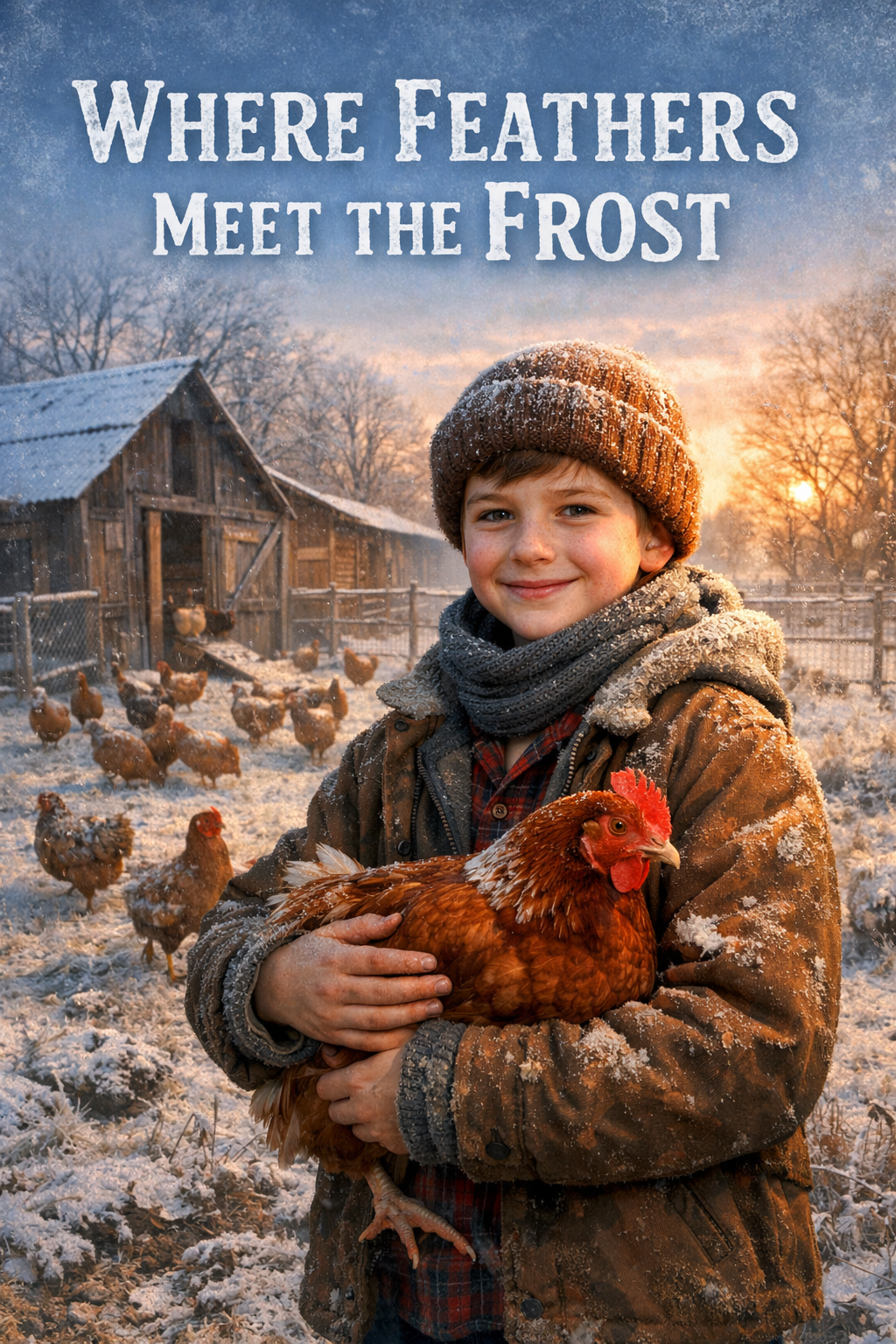
When Ramon first stepped out of the airport in Alberta, the cold felt like a wall.
He had read about winter in Canada, had watched videos of snow falling like soft confetti, had even bought a thick jacket from a surplus store in Manila. But nothing prepared him for the way the wind sliced through fabric and pride alike.
Back home in Pampanga, mornings smelled of wet soil and diesel from passing jeepneys. In Canada, mornings smelled like metal, frost, and something faintly sweet and dusty the scent of feed inside the poultry barns. Ramon was thirty-four, a father of two, and now an Overseas Filipino Worker standing in a land where even the chickens lived in climate controlled comfort.
He worked on a large poultry farm two hours outside Calgary. The property stretched wide and flat, the horizon broken only by silos and low barns shaped like sleeping giants. His employer, Mr. Thompson, was a quiet man who measured his words carefully, like someone counting eggs in a carton.
“Chickens don’t care where you’re from,” Mr. Thompson told him on his first day. “They care if you feed them on time.”
Ramon nodded. He liked that. It made things simple.
His job began at five each morning. He would pull on insulated boots, coveralls, and gloves thick enough to make his fingers clumsy. Inside the barns, thousands of white broiler chickens rustled and clucked, a constant ocean of sound. The heaters hummed overhead, and the automated feeders rattled like steady rain.
At first, Ramon was overwhelmed. The noise. The numbers. The responsibility. One mistake in temperature, one delay in feed, and hundreds of birds could fall sick. He learned quickly how to check ventilation systems, how to adjust feed lines, how to walk slowly among the flock so they wouldn’t panic.
He had raised a few native chickens in the Philippines, but this was different. This was science and business woven together. Charts hung on the walls growth targets, feed conversation ratios, vaccination schedules. Ramon room he rented from a Filipino family in the nearby town.
He missed his wife, Liza, most in the evenings.
When the sun set at four in the afternoon during winter, darkness felt heavier than usual. He would video call home, angling his phone so his children could see the snow piled against the window.
“Papa, is it true the chickens wear jackets?” His youngest once asked.
Ramon laughed, the sound bouncing off concrete walls. “No, anak. The barn is their jacket.”
He didn’t tell them about the loneliness. About how silence outside the farm felt deeper than anything he had known, In Pampanga, there was always karaoke, always a tricycle passing, always a neighbor knocking to borrow sugar. In rural Alberta, the wind was his loudest neighbor.
One February morning, the farm’s main heating system failed.
The temperature outside had dropped to negative twenty-five degrees Celsius. Inside the barn, the air began to cool rapidly. Chickens huddled together, their clucks rising into sharp, distressed cries.
Mr. Thompson was away at a livestock conference. Ramon was alone.
His heart pounded as he checked the control panel. A red warning light blinked angrily. He remembered the training: switch to backup generator, inspect fuel line, monitor internal temperature every ten minutes.
His gloves made the small switches hard to grip. He pulled them off despite the cold, his fingers burning as he worked. The backup generator sputtered before roaring to life. Warm air slowly began to flow from the vents.
Ramon walked the length of the barn for hours, checking thermometers, spreading the flock gently so they wouldn’t suffocate each other in their panic. He spoke to them softly in Tagalog, as if they were children.
“Okay lang, okay lang. Warm na ulit.”
By the time Mr. Thompson returned that evening, the crisis had passed. Losses were minimal. The majority of the flock was safe.
Mr. Thompson studied the temperature logs Ramon had carefully written down.
“You saved me thousands of dollars today,” he said quietly. Then, after a pause: “You did good.”
It wasn’t a grand speech. But to Ramon, it felt like a medal pinned to his chest.
Word spread among the small Filipino community nearby. At Sunday gatherings after church, they teased him.
“Hero ng manok!” One friend joked. Hero of the chickens.
Ramon smiled, but inside he felt something stronger than pride. He felt capable.
Months turned into a year. He learned to drive through snowstorms, to shovel pathways before dawn, to drink coffee black and strong. He sent most of his salary home, watching through photos as his children grew taller. Liza used his remittances to renovate their small house, cement walls replacing bamboo, a sturdier roof to withstand typhoons.
Yet there were moments when doubt crept in.
One summer afternoon, as golden fields rippled under a wide Canadian sky, Ramon stood outside the barn and imagined his children running between those rows instead of him. He wondered if the money was worth the birthdays missed, the school programs watched only through pixelated screens.
That evening, he received a message from Liza. A photo of their eldest holding a certificate first honor in class.
“Para sa’yo, Papa,” the caption read. This is for you.
Ramon sat on the edge of his bed and cried quietly. Not from sadness alone, but from the strange mixture of sacrifice and reward that defined his life abroad.
On his second winter in Canada, Mr. Thompson offered him a longer contract and a small raise. He also offered something unexpected.
“I’m thinking of expanding,” the older man said, gesturing toward an empty stretch of land. “Another barn. I could use someone to supervise. You interested?”
Ramon felt the weight of the question. Supervising meant more responsibility and more trust.
“Yes, sir,” he said firmly.
The new barn rose slowly, steel beams cutting into the sky. Ramon watched construction workers bolt panels into place, remembering how lost he had felt his first day. Now he explained procedures to new hires, some of them newcomers from Mexico and Vietnam. He taught them how to read the temperature charts, how to move calmly among the birds.
“Chickens don’t care where you’re from,” he repeated with a small smile. “They care if you feed them on time.”
He began saving not just for daily expenses, but for a dream. Back in Pampanga, he wanted to start a small poultry business of his own. Not as big as the Canadian farm, perhaps, but organized, efficient, modern.
He filled notebooks with ideas ventilation systems suited for tropical heat, proper vaccination schedules, better coop designs. The cold barns of Alberta had become his classroom.
Three years after he first arrived, Ramon stood once more outside in the snow. The sky was pale blue, almost silver. Around him, the barns stood steady against the wind, heaters humming faithfully inside.
He lifted his phone and switched the camera. Behind him, the farm stretched wide and white.
“For you,” he said softly, recording a video for his family. “This is where feathers meet the frost. This is where Papa learned to be brave.”
The wind stung his cheeks, but he didn’t mind. Somewhere across the ocean, his children would watch this and understand, at least a little, why he had chosen distance.
Ramon was still far from home. He still missed the smell of wet soil and the sound of jeepneys. But in the rhythmic clucking of thousands of chickens, in the steady warmth of repaired heaters, and in the quiet trust of an employer who believed in him, he had found something unexpected.
Not just survival.
But growth.
Like the birds he cared for each day, he had learned to thrive in a climate not hie own feathers strong against the frost, heart steady against the cold.