
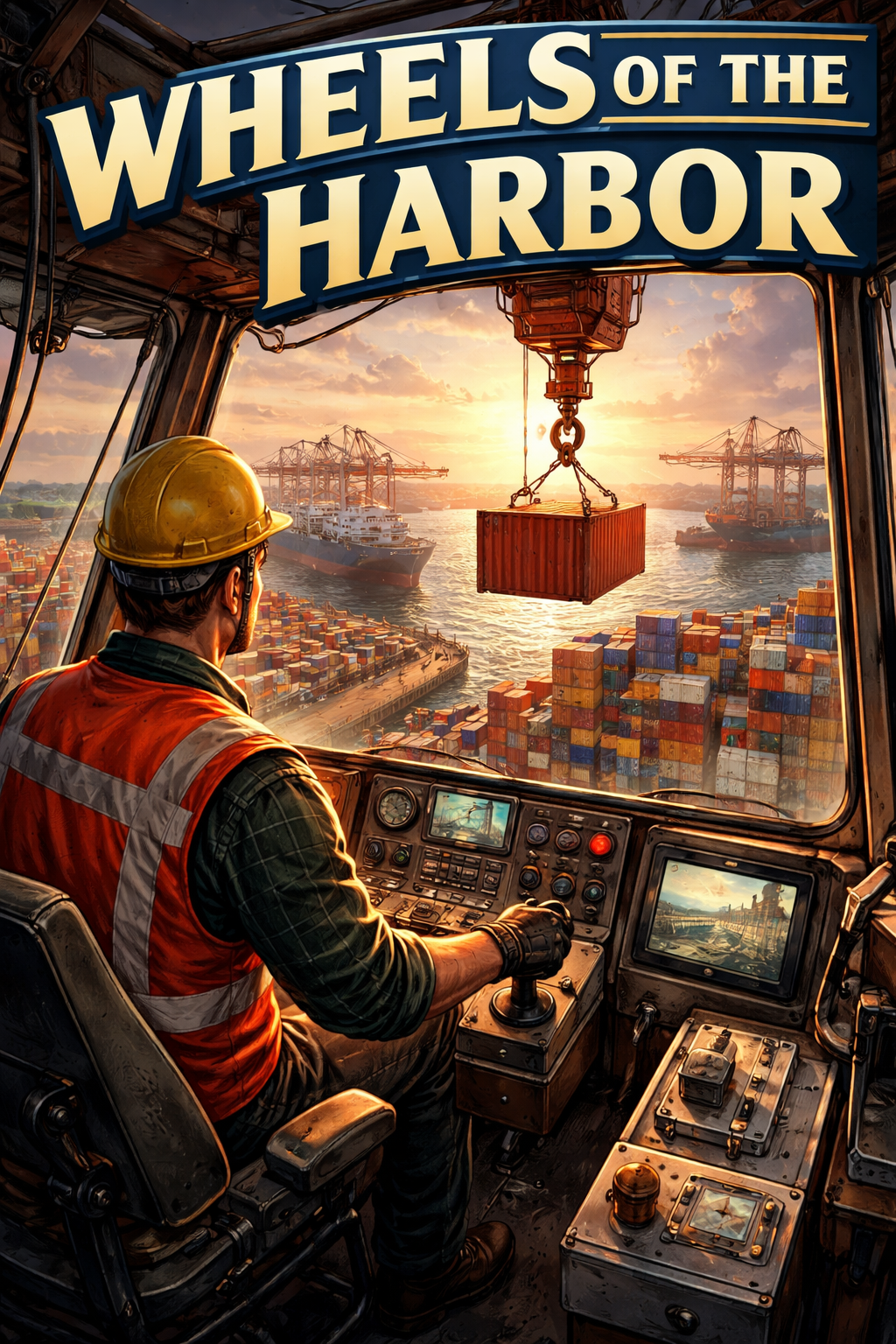
At the busy harbor of Singapore, giant ships arrived every day carrying cargo from around the world.
From a distance, the cranes looked like tall steel giants standing beside the sea.
High above the ground, inside one of those crane cabins, sat Victor.
With steady hands, he controlled the machine that moved massive containers from ship to shore.
Victor came from Zamboanga, a coastal city where boats and ships were part of everyday life. As a child, he often watched cargo ships docking at the port, wondering how workers managed such enormous loads.
His father was fisherman, while his mother sold fish at the market.
Life was not easy.
After finishing vocational training in heavy equipment operation, Victor found work at a small port in Mindanao. There he learned how to operate forklifts and cranes used to move cargo.
But the salary was small.
When an opportunity appeared to work as a port crane operator in Singapore, Victor knew it could change his family’s future.
Leaving home was difficult. His parents hugged him tightly before he boarded the airplane.
“Mag-ingat ka palagi,” his mother said. “I will,” Victor replied.
At the port in Singapore, Victor was amazed by the scale of the operations.
Huge container ships lined the docks, stacked high with colorful metal containers carrying goods from different countries.
Electronics, clothes, food, machinery almost everything passed through the port.
Victor worked inside a crane cabin nearly 40 meters above the ground.
From that height, the harbor looked like a giant puzzle of ships, trucks, and containers.
His job required extreme concentration. Using joysticks and computer monitors, he carefully lowered the crane’s metal spreader onto a container. Once locked in place, he lifted it slowly from the ship.
The container weighed several tons. One wrong movement could cause damage or accidents.
Victor moved the crane carefully, placing each container onto waiting trucks below.
The work was repetitive but important. Without crane operators, cargo could not move efficiently through the port.
During breaks, Victor looked out over the ocean.
Ships arrived from different corners of the world Japan, Europe, America.
He realized that the work he did helped connect countries through trade and transportation.
At night, Victor returned to a dormitory shared with other overseas workers.
“Miss ko na pamilya ko,” one coworker said. Victor nodded quietly.
He missed Zamboanga too.
But every month he sent money home to support his parents and help his younger siblings finish school.
The sacrifices were worth it.
One afternoon, a supervisor approached Victor after observing his work.
“You handle the crane very smoothly,” he said. Victor smiled modestly.
Years of practice had trained his hands and eyes to move with precision.
Soon he became one of the most trusted operators in the port.
Even though most people never noticed the crane operators high above the harbor, Victor understood how important the job was.
Every container he moved carried goods that people somewhere in the world needed.
Food for supermarkets. Clothes for stores. Parts for factories.
The world kept moving because workers like him helped transport these supplies.
After several years abroad, Victor returned to Zamboanga for vacation.
The sea breeze felt familiar as he walked along the shoreline near his home.
Fishing boats floated quietly in the water. His parents welcomed him with warm smiles.
Their house looked stronger now, and his siblings were closer to finishing their education.
That evening, Victor watched a cargo ship slowly crossing the horizon.
He smiled because he now knew the journey of those ships better than most people.
Behind every arriving vessel, behind every container unloaded at busy ports, there are workers high above the harbor guiding steel giants with steady hands so the world can keep moving forward.