
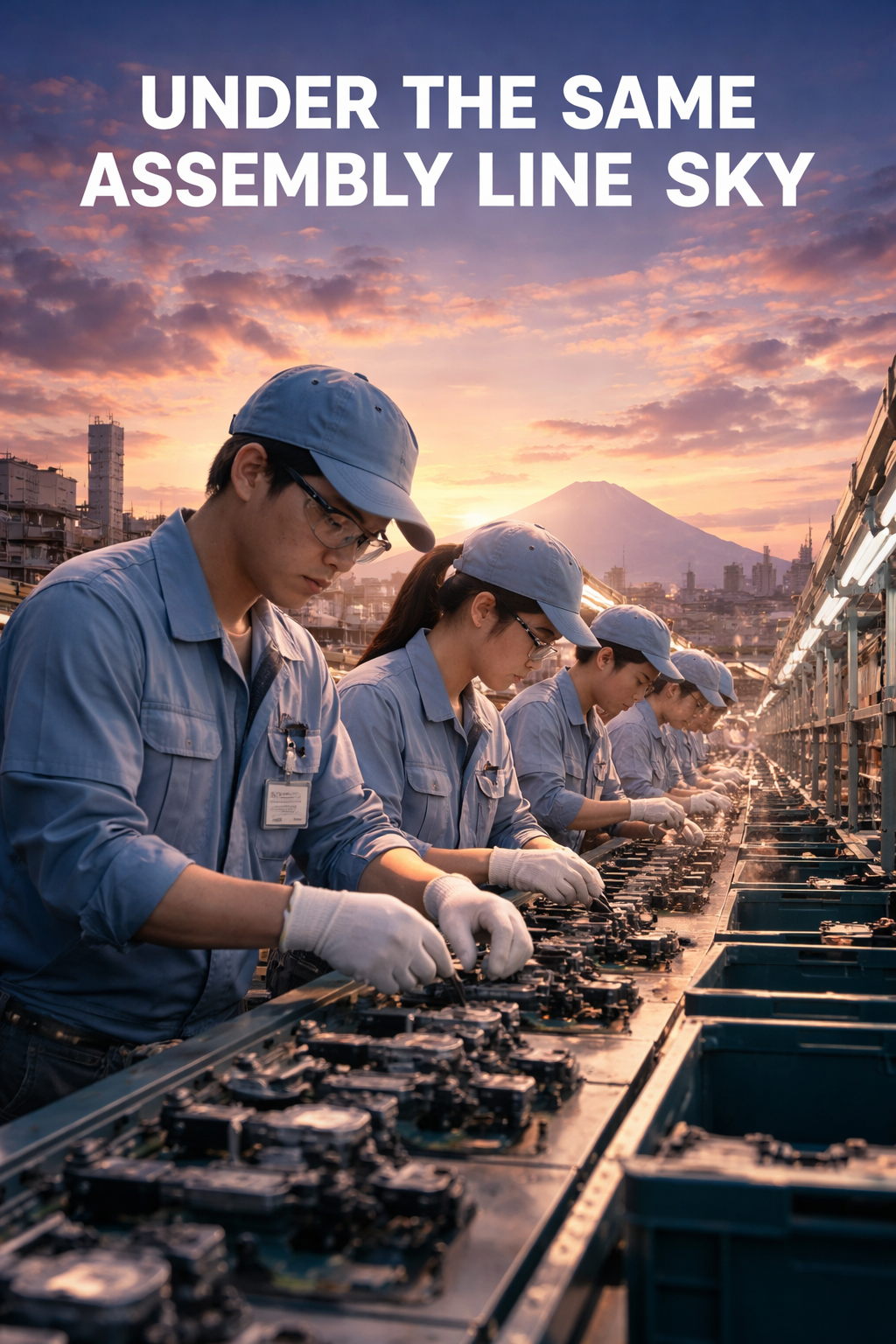
The first thing Shanelle learned in Japan was how to bow properly.
Not too low, not too fast, not too casual.
On her first day inside the electronics factory in Aichi Prefecture, she stood in a neat rows with other workers while the supervisor greeted them with a crisp “Ohayou gozaimasu.” The room smelled faintly of metal and machine oil. The floors were so polished she could almost see her nervous reflection staring back at her.
Shanell had come from a small town in the Philippines, where mornings smelled of rice cooking and sea breeze. In Japan, mornings smelled of discipline.
She was an OFW an overseas Filipino worker hired as an assembly line operator in a factory that manufactured precision components for automotive sensors. Back home, she had worked as a sales clerk earning just enough to help her parents and younger brother. When a friend told her about opportunities in Japan under a technical internship program, she hesitated. She didn’t know the language. She had never seen snow. But she knew what unpaid bills felt like.
So she said yes.
The factory was a world of rhythm and repetition. Conveyor belts moved with quiet determination. Robotic arms pivoted and rotated in exact sequences. Digital monitors flashed numbers units completed, time remaining, quality rates.
Her station was Line 3, Section B. Her job was to inspect small metallic casings, check for microscopic scratches, and fit a rubber seal before passing them along. The components were tiny, barely the size of a matchbox. But the Supervisor emphasized that even a hairline flaw could cause failure in a vehicle system.
“Zero defect,” he said in careful English. “We trust your eyes.”
At first, Liza’s eyes burned from concentration. The fluorescent lights were unforgiving. She learned to adjust the angle of the component under the magnifying lamp, rotating it slowly, searching for imperfections invisible to the untrained eye. Every few hours, a quality control officer would examine her batch. The first week, she made mistakes. A seal placed slightly off-center. A scratch she failed to notice.
She bowed deeply in apology.
In Japan, she realized, mistakes weren’t shouted at they were corrected with quiet seriousness. It made her want to improve even more.
Outside work, everything felt new. The train system amazed her how it arrived exactly on time, how commuters stood in orderly lines. She rented a small apartment with two other Filipina workers. The space was compact, with sliding doors and thin walls, but it was clean and safe.
Winter arrived faster than she expected. One morning, she woke up to silence. When she pulled back the curtain, she gasped. Snow covered the rooftops and streets like powdered sugar. She pressed her hand against the cold glass, feeling both wonder and loneliness.
At the factory, heaters hummed, and everyone continued working as if snow were ordinary. Liza’s fingers felt stiff despite the warmth. She missed the tropical heat of home, the sound of tricycles passing by, the easy laughter of neighbors.
But payday softened the ache.
Every month, she transferred most of her salary back home. Her father used it to repair their fishing boat. Her mother started a small sari-sari store. Her brother enrolled in a computer course. Through remittances, she could almost see their lives improving piece by piece like components moving down her assembly line, forming something functional and strong.
One evening, after overtime, Liza stayed behind to help reorganize materials. The Japanese team leader, nakamura-san, noticed her careful labeling.
“You work hard,” he said.
She smiled shyly. “I try.”
He nodded. “In Japan, we say monozukuri. It means making things with spirit.”
She repeated the word softly. Monozukuri.
It wasn’t just about producing goods. It was about pride in craftsmanship, about pouring intention into each small task. Suddenly, her repetitive job felt different. Each seal she aligned perfectly was part of a larger system cars that would carry families safely, journeys that would begin because her hands had done their work well.
Months turned into a year.
Her Japanese improved little by little. She learned workplace phrases, how to read basic kanji on safety signs, how to joke lightly with coworkers during lunch break. They shared snacks she offered dried mangoes from home; they offered rice crackers and matcha sweets.
Still, homesickness visited her unexpectedly. During Filipino holidays, she scrolled through photos of fiestas and family gatherings. She watched videos of her niece learning to walk. She wiped away tears quietly before sleeping, careful not to wake her roommates.
One day, the factory introduced a new automated inspection system. Some workers worried it would replace manual inspectors. Liza felt a flicker of fear. Had she crossed oceans only to become unnecessary?
During training, however, she realized the machine still required human oversight. It detected surface irregularities, but it couldn’t judge certain subtle defects the way trained eyes could.
Nakamura-san assigned her to assist with calibrating the new system. She carefully compared machine results with her own inspections, marking discrepancies and reporting patterns. Her steady performance during the past year had built trust.
“You have good focus,” Nakamura-san told her. “And patience.”
For the first time, she felt something more than survival. She felt growth.
One spring afternoon, cherry blossoms bloomed outside the factory gates. Pink petals drifted in the breeze, collecting along the sidewalks. During lunch break, Liza stood beneath a Sakura tree with her coworkers. Someone handed her a small bento box filled with rice and grilled fish.
She looked at the failing petals and thought about how fragile they were. They bloomed beautifully, then disappeared within days. Yet every year, they returned.
Her contract would end in another year. She had begun saving not just for daily needs back home, but for a small dream a modest printing and photocopy shop near her town’s public school. Something stable. Something of her own.
That evening, she video-called her family. The sari-sari store shelves behind her mother looked fuller now. Her brother excitedly showed her a programming project he had created. Her father’s smile seemed lighter.
“Anak, we’re proud of you,” her mother said.
Liza felt tears rise, but she smiled brightly. “Just a little more time,” she replied.
As she prepared for bed, she reflected on the assembly line she would return to the next morning. The conveyor belt would move steadily. The lights would shine. The monitors would count each finished piece.
And she would stand there again, inspecting, aligning, ensuring zero defect not just in metal casings, but in the life she was carefully building.
Under the same assembly line sky, thousands of miles from home, Liza understood something important.
She was not just assembling parts in a factory.
She was assembling a future.