When Carlo first saw the skyline of Singapore from the airplane window, it looked like a city drawn with precision glass towers reflecting sunlight, ships lined neatly along the harbor, roads curving without chaos. Everything appeared organized, efficient, almost flawless.
He wondered where someone like him would fit in.
Back home in Pampanga, Carlo had worked as a hospital orderly earning minimum wage. His father’s stroke changed everything. Therapy sessions were expensive, medicines constant, and savings quickly disappeared. When a recruitment agency announced openings for healthcare assistants in Singapore, Carlo applied without overthinking.
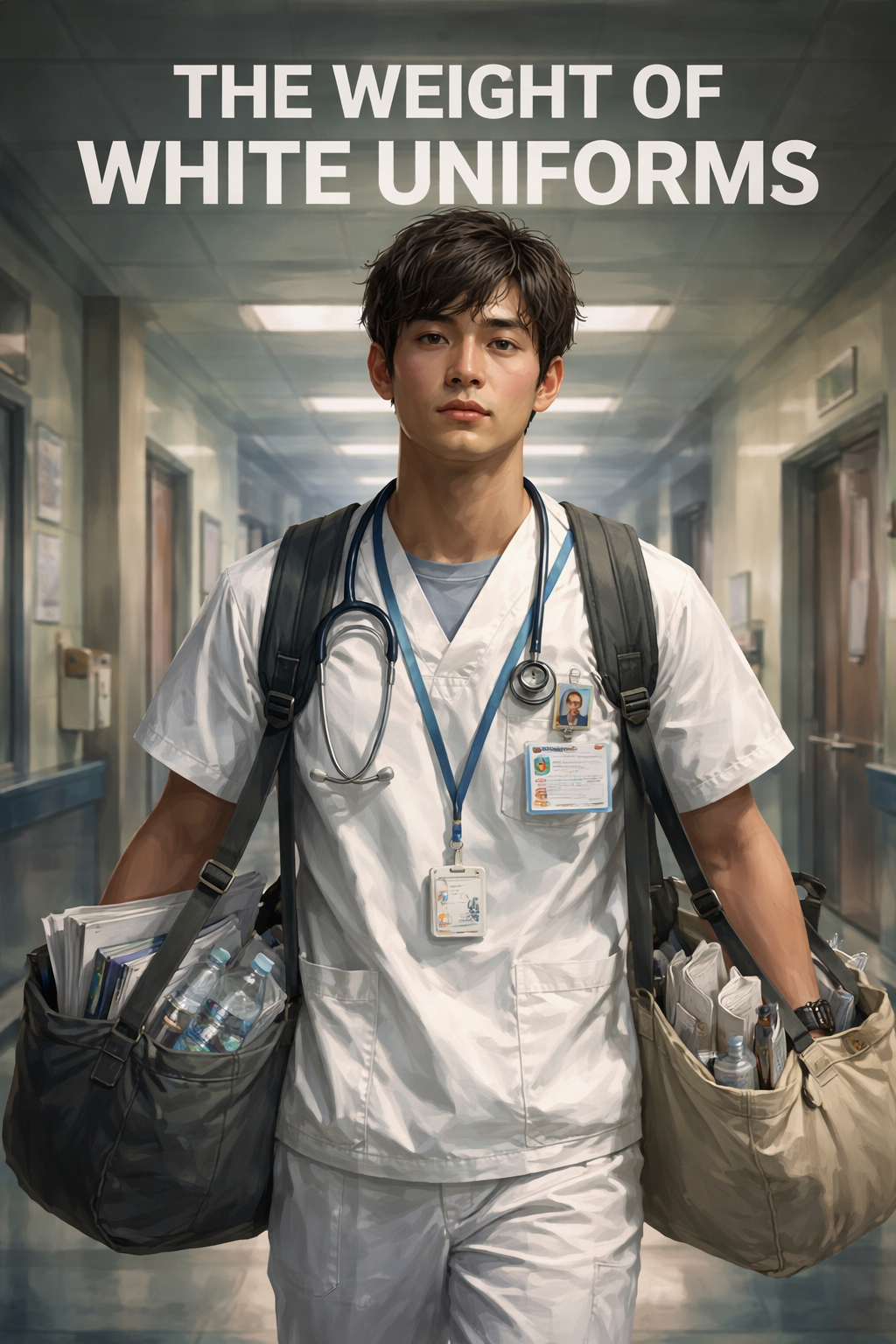
Two months later, wearing a crisp white uniform, he stood inside a private hospital in Singapore, clutching his ID badge like it was a passport to survival.
His role was simple in description but heavy in responsibility. He assisted nurses, transported patients, changed linens, sanitized equipment, and ensured wards were orderly. He was not the doctor delivering diagnoses nor the nurse administering injections. He worked in the background, invisible to many but essential all the same.
The hospital operated like a well-oiled machine. Schedules were strict. Breaks were timed. Documentation had to be precise. Carlo admired the discipline but struggled at first to keep up with the pace.
Patients came from different nationalities Chinese,Malay, Indian, expatriates from Europe and Australia. Each room hel a different language, a different story.
He learned to read faces when words failed.
There was Mr. Tan, an elderly man recovering from surgery who rarely spoke but squeezed Carlo’s hand whenever he adjusted his blanket. There was Aisha, a young mother undergoing treatment, who cried silently at night when visiting hours ended.
Carlo noticed these details. He remembered how helpless his father looked in a hospital bed back home. He treated every patients as if someone far away was praying for them.
His shifts often stretched to twelve hours. By the end of the day, his feet throbbed inside his rubber shoes. Yet every time his phone buzzed with a message from his mother “Nak, therapy went well today” his exhaustion felt lighter.
Singapore was different from home in many ways. The public transport ran on time down to the minute. Streets were spotless. Laws were strict. He rented a small shared room with two other Filipinos healthcare workers. Space was limited, but laughter was abundant.
On Sundays, they gathered at Lucky Plaza along Orchard Road, joining hundreds of fellow Filipinos. The air filled with Tagalog chatter, the smell of packed lunches, and stories of survival.
For a few hours, homesickness softened.
But there were difficult nights.
One evening, a code blue was announced in Ward C. Carlo rushed alongside the medical team. He helped move equipment, cleared space, followed instructions. Despite everyone’s efforts, the patient did not survive.
Afterward, he stood in the supply room longer than necessary, staring at shelves of neatly stacked gloves and masks. Death was not new to him, but witnessing it in a foreign land, far from family, felt heavier.
He called his mother that night.
“How are you, anak?” Sha asked.
“I’m okay,” he replied automatically.
But he wasn’t entirely okay.
Being an OFW meant carrying emotions quietly. You had to be strong because people back home believed you were living a better life. They saw remittances, not the long shift. They saw photos of city skylines, not tears hidden behind bathroom doors.
Months turned into a year.
Carlo grew confident. Nurses trusted him. Doctors recognized his efficiency. He memorized hospital layouts, learned basic Mandarin phrases, and improved his medical knowledge through observation.
One afternoon, while assisting in physical therapy, he noticed how carefully therapists guided patient’s movements. He paid close attention, asking respectful questions during downtime. Slowly, an idea formed in his mind.
Why not study further?
He began setting aside part of his salary not just his father’s treatment, but for his own education. He enrolled in online prerequisite courses during his limited free time. After exhausting shifts, he reviewed anatomy modules instead of watching movies.
Sleep became shorter, but purpose grew stronger.
Two years later, his father could walk short distances with a cane. Therapy sessions decreased. Medical bills became manageable.
Carlo applied for a part-time diploma program in physiotherapy assistance in Singapore. When his acceptance letter arrived, he stared at it for long time before smiling.
He wasn’t just surviving anymore.
He was building something.
Balancing work and study was brutal. Some days, he questioned his limits. But watch time he considered giving up, he remembered his father’s first independent steps after the stroke. Progress was slow but possible.
One evening, as helped Mr. Tan practice walking with a frame, the elderly man paused and looked at him.
“You are very patient,” Mr. Tan said softly.
Carlo smiled. “My father taught me patience.”
In that simple exchange, he understood something powerful: caregiving was not just physical assistance. It was the quiet transfer of strength from one person to another.
Years after he first arrived in Singapore, Carlo stood in the hospital corridor again but this time wearing a different badge. He had completed his certification and was promoted to rehabilitation assistant.
The white uniform still felt familiar, but lighter somehow.
He video called his family that evening, holding up his new ID proudly. His mother cried openly. His father lifted his cane in celebration.
“You did it, anak,” his father said.
Carlo shook his head gently, “We did it.”
Because that was the truth of being an overseas worker. No success was individual. Every sacrifice was shared across oceans.
As he walked home that night, city lights reflecting off glass buildings, he felt gratitude instead of uncertainty. The organized skyline that once intimidated him now felt like proof that systems like people could rebuild after breaking.
He had arrived in Singapore carrying fear and financial burden.
He stayed carrying responsibility.
And he would someday return home carrying experience, education, and the quiet pride of knowing that beneath the spotless white uniform was a heart that endured distance, loss, growth, and hope.
The weight of that uniform had once felt heavy.
Now, it felt earned.