Every morning before the sun rose, Ernesto tied his boots carefully.
Not because they were new.
But because he knew his life depended on them.
Ernesto grew up in a small barangay in Pangasinan where work was often uncertain. His father farmed rice on rented land, and during dry seasons the fields produced almost nothing.
As the eldest son, Ernesto felt the weight of responsibility early.
He finished high school but couldn’t afford college. Instead, he worked wherever he could construction sites, repair jobs, even carrying heavy sacks in the public market.
It was tiring work, but the pay barely covered daily needs.
When a recruiter visited their town looking for scaffolders for a large construction company in the Middle east, Ernesto listened carefully.
The job required courage.
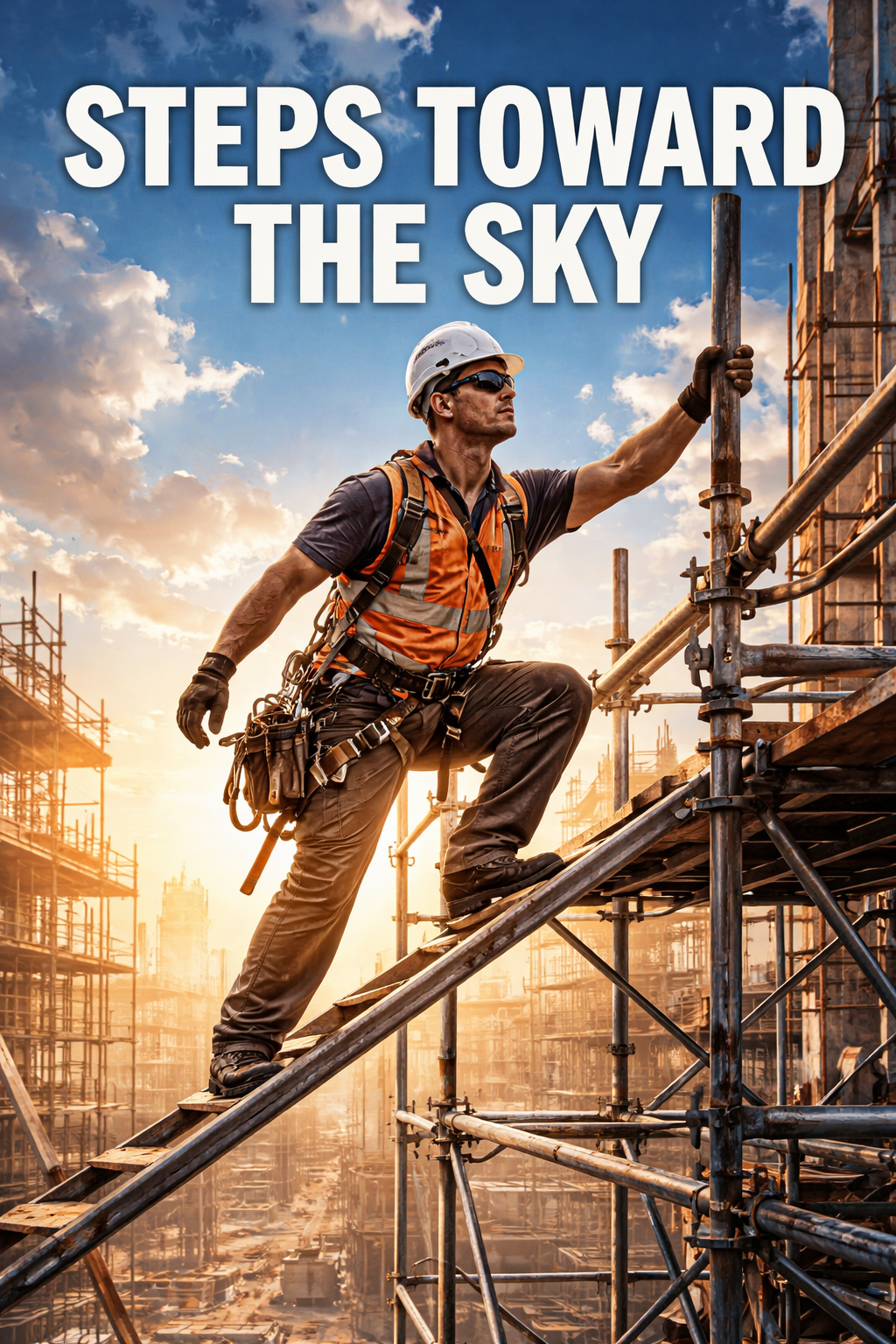
Scaffolders build temporary metal structures that allow construction workers to reach high areas of buildings. Without scaffolding, skyscrapers could not rise.
The salary sounded like hope.
After weeks of training and paperwork, Ernesto boarded a plane for the first time. His destination was Abu Dhabi in the United Arab Emirates.
From the airport bus window, he saw towering buildings shining under the desert sun.
Some were so tall they seemed to touch the clouds.
“Diyan Tayo magtatrabaho,” a coworker said.
Ernesto swallowed his nervousness.
The construction site was enormous. Tower cranes moved slowly above unfinished buildings. Trucks delivered steel pipes and metal platforms used for scaffolding.
His job required assembling these parts like a giant puzzle.
Steel tubes were connected with clamps and joints. Platforms were secured carefully so workers could stand safely while building walls, installing glass panels, or painting exterior surfaces.
It looked simple from the ground.
But Ernesto often worked many floors above it.
The first time he climbed the scaffolding ladder to the twentieth floor, his heart pounded loudly in his chest.
The wind felt stronger at that height.
The ground looked impossibly far below.
“Relax,” an older Filipino worker told him. “Masasanay ka rin.”
And slowly, Ernesto did.
Every morning began with safety checks. Helmets, harnesses, gloves, and boots were mandatory. Supervisors inspected the scaffolding structures carefully before workers climbed them.
Even a small mistake could be dangerous.
Ernesto learned to tighten clamps securely and check every connection twice.
Because the safety of many workers depended on the scaffolding he built.
Under the scorching desert sun, he carried heavy steel tubes across platforms and climbed ladders dozens of times each day.
Sweat soaked his uniform.
But he kept moving.
Because every day of work meant another day closer to his dreams.
At night, he returned to the labor camp where eight men shared a room. They cooked rice using a small electric cooker and laughed while watching Filipino shows on their phones.
Sometimes they talked about home.
“Miss ko na adobo ni miss,” one coworker sighed.
“Miss ko na anak ko,” another admitted quietly.
Ernesto usually listened silently.
He missed his family too.
Every weekend he called his parents. The money he sent home helped repair their leaking roof and but better farming tools.
His younger brother was able to continue high school.
Those simple improvements made every difficult day worthwhile.
One afternoon, while working on a skyscrapers project, Ernesto climbed nearly thirty floors to adjust a section of scaffolding.
From that height, the entire city stretched below him rds like thin lines, cars like tiny toys.
For a moment, he paused.
The wind brushed his face.
He realized something incredible.
He had started as a poor farmer’s son who barely left his province.
Now he was helping build towers in one of the most modern cities in the world.
Not everyone could see the importance of a scaffolder’s work.
Most people noticed the finished buildings the glass walls, the shining lights.
But before those buildings could stand tall, someone had to build the paths workers used to reach the sky.
That someone was him.
Years passed, and Ernesto became one of the most trusted scaffolders in his team. Supervisors often assigned him to complicated sections requiring careful planning.
He even trained new workers arriving from different countries.
“Safety first,” he always reminded them.
“Your family is waiting for you back home.”
After four years abroad, Ernesto finally returned to Pangasinan for a long vacation.
The changes surprised him.
Their house now had concrete walls and a sturdy roof. His brother had graduated from senior high school. Their farm had new irrigation pipes.
All built from the sacrifices he made far from home.
One afternoon, Ernesto sat outside their house watching the sunset paint the rice fields gold.
The quiet felt peaceful compared to the noisy construction sites he had grown used to.
He looked at his rough hands scarred, strong, and tired.
Those hands had lifted steel pipes high above the ground.
They had built temporary bridges for workers climbing toward the sky.
People might never know his name.
They might never notice the scaffolding once buildings were finished and shining.
But Ernesto knew the truth.
Every great structure rises because someone first built the steps.
And fro many towering buildings in distant cities, those first steps were made by q quiet worker from Pangasinan.
A man who climbed higher each day.
Not just for work,
But for the dreams waiting for him at home.