When Mario was a boy in Ilocos Norte, he used to watch tractors crawl across rice rice fields like slow-moving animals. He loved the way their metal arms lifted and lowered, shaping the earth with quiet power.
He never imagined that one day, he would be inside a machine far bigger than those tractors guiding steel and hydraulics beneath the scorching sun of the Middle East.
Mario didn’t finish college. His father suffered a stroke during his second year of mechanical engineering, and the family’s small vulcanizing shop barely covered medicines. As the eldest of four siblings, Mario left school and took whatever work he could find construction helper, delivery driver, farmhand.
He learned quickly. Especially machines.
When a local contractor let him try operating a backhoe one afternoon, something clicked. The levers, the pedals, the coordination it felt natural.
“You’ve got steady hands,” the contractor said.
Years later, those steady hands earned him a contract as an excavator operator in Abu Dhabi.
The first time he saw the desert stretching endlessly beyond the airport window, he felt small. The sand seemed alive, shifting with the wind.
His job site was a massive infrastructure project new highways and drainage systems rising from the flat desert floor. Rows of heavy equipment lined the site: bulldozers, dump truck, cranes.
And there it was.
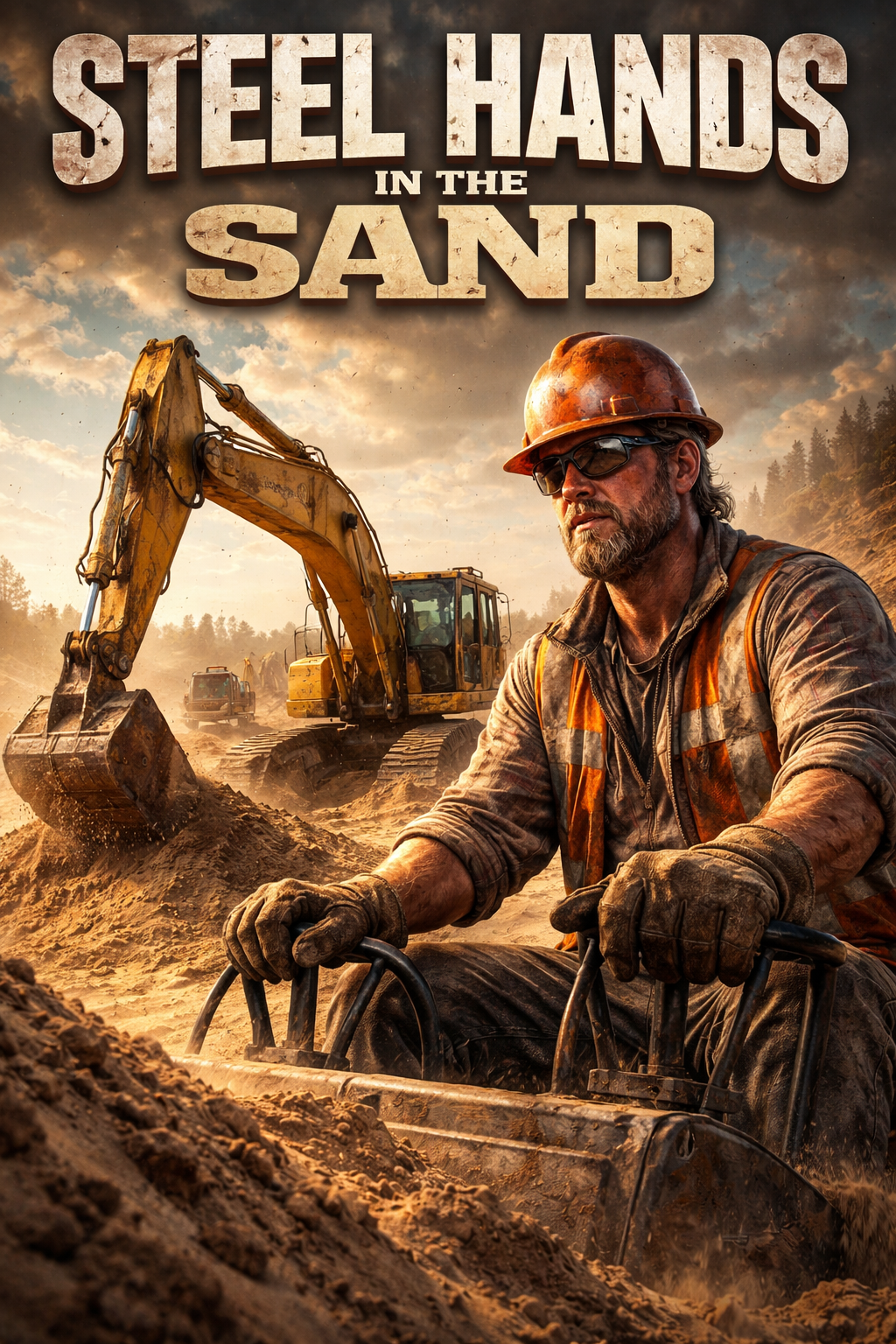
A bright yellow excavator, towering and powerful.
For Mario, it was like meeting a giant he would soon command.
His routine began before sunrise. Safety briefings at 5:00 a.m. Helmet on. Gloves tight. Climb into the cabin.
Inside, the world narrowed to glass windows, joysticks, and the low rumble of the engine.
He would lower the boom carefully, dig into the compacted sand, lift tons of earth, and swivel to deposit it precisely where needed.
Operating an excavator wasn’t just about strength. It was about control.
Too deep, and you risk damaging underground utilities. Too shallow, and the engineers would send you back to redo the trench.
The first week, Mario barely spoke. He focused on proving himself. Many operators came from different countries India, Pakistan, Egypt. They watched quietly, measuring his skill.
One afternoon, the site engineer approached him.
“Trench must be exactly two meters deep, consistent across one hundred meters,” the engineer instructed. “No variation.”
Mario nodded.
The desert sun beat down mercilessly. Heat shimmered across the sand. Sweat trickled down his back inside the air-conditioned cabin.
Slowly, carefully, he moved the machine. Dig. Lift. Rotate. Release.
He checked the depth markings repeatedly. Adjusted angles. Smoothed the base.
When the engineer returned with measuring tools, he ran them along the trench silently.
Then he looked up.
“Good work.”
Two simple words but in that moment, Marion felt taller than the machine he operated.
At night, he returned to shared accommodation. Six men in one unit. The smell of rice cooking in a small electric pot. Laughter over shared stories of home.
Mario called his mother every evening.
“Kumusta si Papa?” He would ask.
“Stable na,” she would reply. “Your sister topped her class again.”
He smiled, imagining his younger sister studying under a fluorescent lamp back home.
Each month, most of his salary went directly to hospital bills, school fees, and repairing their aging house.
He kept little for himself.
Except for one thing a small toy excavator he bought at a supermarket. He planned to give it to his youngest brother someday.
The work was not always smooth.
During one shift, a sudden sandstorm rolled in without warning. Visibility dropped drastically. Fine dust hit the cabin windows like rain.
Operations halted immediately.
Inside his machine, Mario sat still, listening to the wind howl. The desert reminded everyone who was in control.
When the storm passed, the site looked transformed. Half-dug trenches partially filled again.
Back to work.
Re-dig. Re-level. Re-measure.
There were days his arms felt heavy, even with hydraulic assistance. Days when homesickness crept in like a quiet ache.
He missed birthdays. Christmas. Fiesta celebrations.
One December evening, while video-calling his family during their Noche Buena, he saw the familiar spread of pancit and lechon on the table.
“Next year, andito na Ako,” he promised.
His mother smiled, though her eyes looked tired.
During his second year, a new Filipino worker joined the team a young man named Carlo, inexperienced and nervous.
Mario took him under his wing.
“Don’t fight the machine,” Mario advised as Carlo struggled with the controls. “Feel it. It’s like steering a boat.”
Slowly, Carlo improved.
One afternoon, a pipe installation crew made a mistake marking underground lines. Mario noticed something odd about the soil color while digging.
He stopped immediately.
“Check this area,” he radioed.
It turned out a water line ran closer than marked. If he had dug deeper, it would have ruptured causing delays and costly damage.
The supervisor later approached him.
“You saved us time and money,” he said.
Mario simply nodded. He didn’t need applause. He just needed to do his job well.
After three years, the highway project neared completion. Standing beside his parked excavator one sunset, Mario watched cars test-drive the new road.
He felt a strange pride.
People would drive there daily never knowing the names of those who shaped the land beneath their wheels.
But he would know.
When his contract finally ended, he returned home to Ilocos.
The airport reunion was loud and tearful. His father, thinner but smiling, hugged him tightly.
“You look stronger,” his father said.
“Machines are heavy,” Mario joked.
Back home, he used his savings to expand their small vulcanizing shop into an auto repair garage. He invested in better equipment. Hired two local workers.
And one afternoon, he handed his youngest brother the small toy excavator.
“For you,” he said.
His brother’s eyes lit up.
“Kuya, did you really drive a big one like this?”
Mario laughed. “Even bigger.”
Sometimes, at sunset, he would sit outside the garage and watch tricycles pass by. The air smelled of salt from the nearby sea.
He had once operated steel arms in a desert far from home.
Now, his hands built something closer to his heart a stable future for his family.
Steel machines shaped the sand.
But sacrifice shaped him.
And in both lands under blazing desert skies and gentle Philippine sunsets Mario left his mark on the earth.