Jun Mark grew up beside the docks of Cebu, where ships came and went like giant moving cities. As a boy, he would sit on wooden crates near the harbor, watching Sparks fly from welding torches while workers repaired massive vessels.
He didn’t know their job titles then.
He only knew one thing.
The ships moved again because of them.
His father had been a fisherman whose small boat barely provided enough income for their family. When storms came, fishing stopped. When the sea was rough, the dinner table grew quiet.
Jun Mark promised himself early that he would bui a different life.
After finishing a technical course in welding and metal fabrication, he worked briefly in a small shipyard in Cebu. The work was hard cutting steels plates, grinding rough edges, welding beams together under intense heat.
But he enjoyed it.
Steel felt honest.
If you welded it right, it held strong.
If you rushed, it cracked.
A recruitment agency eventually offered him a position as a ship fitter in a large shipyard in South Korea.
The salary was something he had never imagined earning in the Philippines.
Leaving home, however, was harder than expected.
At the airport, his mother hugged him tightly.
“Mag-ingat ka sa trabaho mo,” she whispered.
“I will, Ma,” he promised.
When Jun Mark arrived in Busan, the shipyard stunned him. The area stretched for kilometers along the coastline. Towering cranes lifted steel blocks heavier than houses. Massive ships under construction stood like skeletons of iron against the sky.
It was louder than anything he had ever experienced.
Grinding machines screamed. Hammers clanged. Welding arcs flashed like tiny lightning storms.
His job as a ship fitter was crucial in the shipbuilding process. He assembled steel components that formed the body of the vessel.
Using blueprints, he measured steel plates and beams, aligned them carefully, and welded them into place so that each section fit perfectly with the next.
Precision mattered.
A mistake of even a few millimeters could cause serious problems when assembling huge sections of the ship.
His first assignment was on a cargo vessel nearly three hundred meters long.
Standing beside it, Jun Mark felt small.
But when he climbed the scaffolding began working, he realized something powerful.
Every giant ship was built piece by piece.
And his hands were part of that process.
His daily routine began before sunrise. Workers gathered for safety briefings before entering the shipyard. Hard hats, gloves, safety glasses, and thick boots were mandatory.
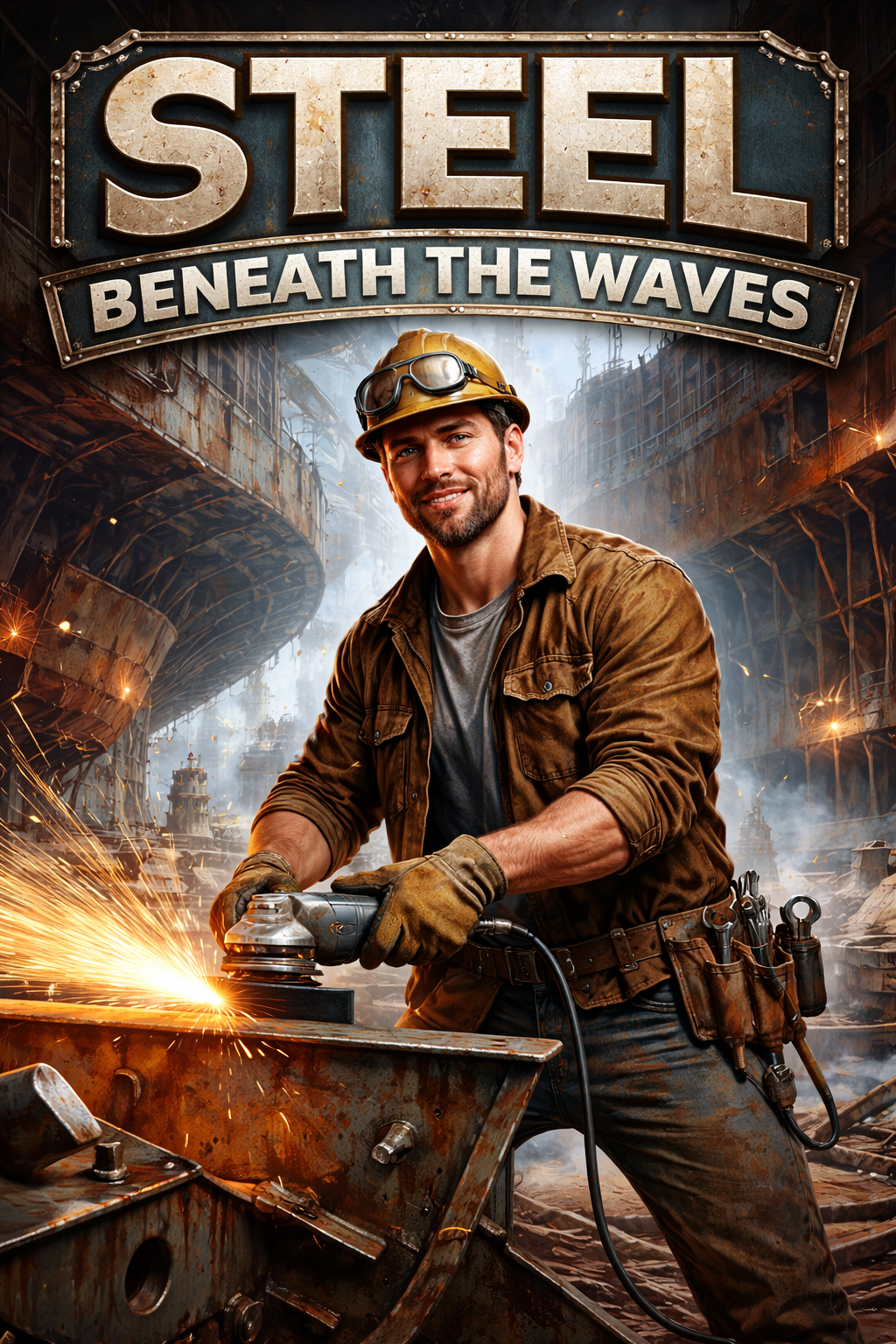
Inside the hull of the ship, the air smelled of metal and burning steel. Sparks flew as welders sealed plates together.
Jun Mark used measuring tools to ensure beams aligned correctly before securing them in place. Sometimes he worked inside narrow steel compartments where space was barely enough to crouch.
The heat could be unbearable.
But he kept going.
Each month, he sent most of his salary home.
His parents repaired their aging house. His younger sister enrolled in college. His family’s worries slowly began to ease.
Still, life abroad wasn’t easy.
Winter in Busan shocked him. The cold wind from the sea cut through his jacket like a blade. His hands often stiffened before the workday even began.
But Filipino workers supported each other.
During lunch breaks, they gathered around metal tables sharing rice, canned goods, and stories from home.
“Pag-uwi ko, bibili Ako ng maliit na lupa,” one coworker said.
“Ako Naman, sari-sari store,” another added.
Jun Mark smiled quietly.
His dream was simple.
He wanted his parents to retire comfortably.
One afternoon, while fitting a steel section inside the hull, a supervisor inspected their work carefully.
He ran his hand along the welded seams and nodded.
“Very good alignment,” the supervisor said.
Jun Mark felt pride warm his chest.
Ship fitters rarely received public recognition.
Passengers on finished ships would never know their names.
But those ships crossed oceans safely because of invisible hands like his.
After work, Jun Mark often walked along the harbor. From a distance, he could see finished ships leaving the port slowly, guided by tugboats.
Watching them disappear into the horizon gave him a strange sense of accomplishment.
Somewhere in that massive structure were steel beams he had fitted perfectly.
Years passed.
Jun Mark completed contracts building cargo ships, oil tankers, and even luxury cruise vessels.
His skills improved. His confidence grew.
Eventually, he was promoted to lead fitter for a small team of workers.
He taught younger employees how to read blueprints and measure accurately.
“Always double-check,” he reminded them.
Steel forgave no carelessness.
After five years abroad, Jun Mark returned to Cebu for a long vacation.
Standing once again near the docks where he had watched shipyard workers as a child, he felt a quiet pride.
He had become one of them.
But now, his family’s life looked different.
Their home was stronger. His sister had graduated from college. His parents no longer worried about daily expenses.
One evening, Jun Mark sat by the shoreline watching a cargo ship slowly move across the distant horizon.
The sunset reflected across the water, turning the ship’s silhouette gold.
Most people would only see a vessel sailing across the sea.
But Jun Mark saw something deeper.
He saw thousands of steel plates welded together with patience.
He saw sparks flying in noisy shipyards.
He saw workers sweating under helmets and gloves.
He saw sacrifice.
Ships travel far across oceans.
But the strength that carries them begins with workers who stand quietly behind the scenes.
Workers like Jun Mark
Men who shaped steel,
Who brave heat and cold,
And who build giants that sail across the world.