
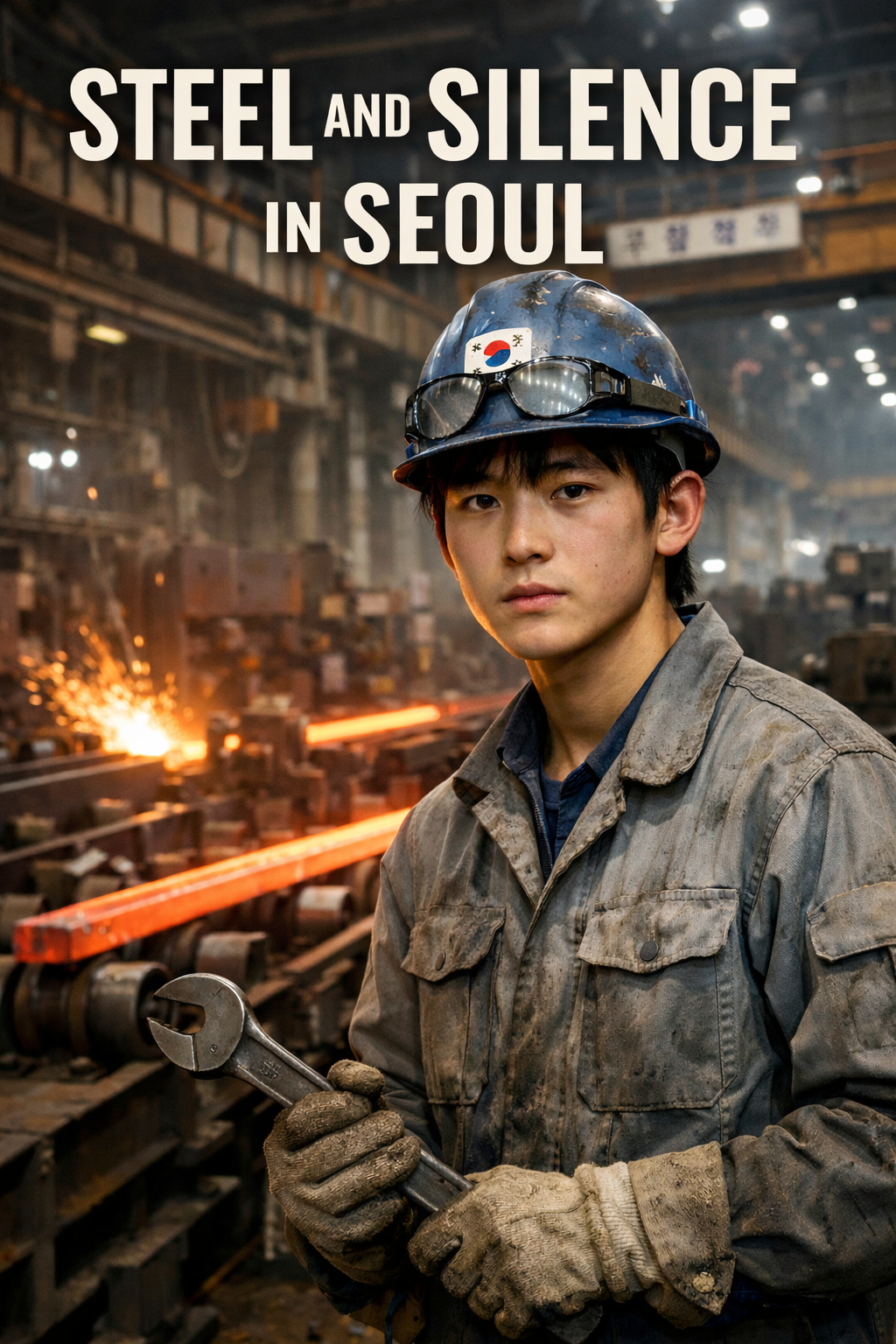
The first winter in South Korea taught Jun how loud silence could be.
In his hometown in Batangas, mornings began with roosters crowing, neighbors sweeping yards, radios playing old love songs. In Seoul, his mornings began before sunrise inside a small dormitory room he shared with three other Filipinos workers. The only sound was the hum of the heater fighting against the cold.
Jun was thirty-five when he left the Philippines to work as a production worker in a steel manufacturing plant in South Korea. Back home, he had been a tricycle driver. He worked long hours but earned barely enough to cover rent, food, and his daughter’s school supplies. When the opportunity came through a government employment program for factory workers abroad, he grabbed it.
He told himself it would only be for a few years.
The factory stood in an industrial district outside Seoul massive, gray, and intimidating. Inside, machines roared like restless giants. Sheets of steel moved along conveyor systems, sparks flying as they were cut and molded into parts for ships and construction equipment.
Jun’s job was in the finishing section. He inspected metal panels for dents, measured dimensions using digital calipers, and ensured each piece met strict standards before packaging. The work demanded precision. One miscalculation could cost the company thousands.
At first, language was his biggest barrier. Instructions were given mostly in Korean. He memorized phrases quickly: “ppalli” (hurry), “joesonghamnida” (sorry), “gwaenchanhayo” (it’s okay). He carried a small notebook in his pocket, writing down unfamiliar words during breaks.
His supervisor, Mr. Park, was stern but fair. On Jun’s second week, he pointed at a slightly misaligned panel.
“No good,” Mr. Park said firmly.
Jun bowed slightly. “Joesonghamnida.”
He stayed after shift to practice measuring and aligning the panels. His hands trembled from exhaustion, but he refused to be sent home for poor performance. Too much depended on him.
Every month, he wired most of his salary back home. His wife managed the finances carefully paying debts, saving for their daughter’s education, setting aside a small amount for emergencies. Through video calls, he watched his daughter grow taller. She would hold up her notebooks proudly.
“Papa, I got high grades!”
Those moments gave him strength.
Winter in Korea was unlike anything he had experienced. Snow fell heavily, covering factory rooftops and streets in white. The cold bit into his skin, even through thick gloves. Some mornings, his breath formed clouds in the air as he waited for the company bus.
But inside the factory, heat from molten steel wrapped around him like fire. The contrast was extreme freezing outside, scorching inside. It felt symbolic of his life: cold loneliness balanced by burning determination.
Jun formed quiet friendships with other migrant workers from Vietnam, Nepal, and Indonesia. During lunch, they exchanged stories in broken English and laughter. They shared homemade dishes kimchi from Korean coworkers, adobo from Jun’s kitchen attempts, spicy noodles from others.
Though far from home, they created a small community of understanding.
One evening, an accident occured in a neighboring section. A machine malfunctioned, injuring a worker’s hand. The factory floor fell into tense silence as supervisors rushed in. Jun felt his chest tighten.
Danger was always present in heavy industry.
That night, he lay awake in his dormitory bed staring at the ceiling. What if something happened to him? What would become of his family?
The fear was real. But so was his resolve.
The next day, he volunteered for additional safety training. He studied equipment manuals carefully, learning not just how to operate machines, but how they worked. Knowledge, he believed, was protection.
Months turned into two years.
Jun’s Korean improved steadily. He could now understand most instruction without translation. Mr. Park began trusting him with more responsibility assigning him to guide new workers in the finishing section.
‘Jun is careful,” Mr. Park told a group once. “Follow his example.”
Hearing that filled him with quiet pride.
He started setting aside savings for a dream he had carried silently: opening a small hardware and construction supply store back in Batangas. With his factory experience, he now understood steel grades, measurements, and materials better than ever. The knowledge was no longer just for survival it was preparation.
During his third year, his daughter told him she wanted to become an engineer.
“I want to build big buildings, Papa,” she said excitedly over video call.
Jun smiled widely. “Then study hard. Papa is working hard too.”
He didn’t tell her about the days his muscles ached so badly he struggled to lift his arms. He didn’t tell her about the loneliness that sometimes hit during Korean holidays when local workers went home to families. He simply reminded himself that sacrifice today meant opportunity tomorrow.
One spring afternoon, cherry blossoms bloomed near the factory entrance. Pink petals drifted across the industrial yard, soft against the backdrop of steel and smoke. Jun paused briefly, watching them fall.
Beauty, he realized, could exist even in the harshest environments.
When his contract neared completion, he faced a choice: renew for another term or return home and start the business with the savings he had built.
After long discussion with his wife, he chose to return.
On his last day, Mr. Park shook his head firmly. “You are good worker,” he said. “Come back anytime.”
“Gamsahamnida,” Jun replied, bowing slightly.
As the plane lifted off from Seoul, Jun looked down at the city that had tested him. He arrived years ago uncertain, intimidated by language and machinery. He left with new skills, stronger discipline, and a deeper understanding of himself.
Back in Batangas, the air felt warmer, the noise more chaotic but comforting. Within months, his small hardware store opened near a busy road. Steel rods, bolts, and construction materials lined the shelves neatly.
Customers often asked detailed questions about materials.
Jun answered confidently.
Because he had handled steel in massive factories. He had measured it under strict standards. He had learned its strength and his own.
One afternoon, his daughter stood beside him in the shop, sketching building designs in a notebook.
“Papa, when I’m an engineer. I’ll build something big,” she said.
Jun placed a hand on her shoulder.
“Whatever you build,” he replied softly, “build it strong.”
He knew something about strength now.
Not just the strength of steel forged in fire.
But the strength of a father who crossed borders, endured silence, braved winter, and returned home carrying more than savings.
He carried resilience hardened, tested, and unbreakable.