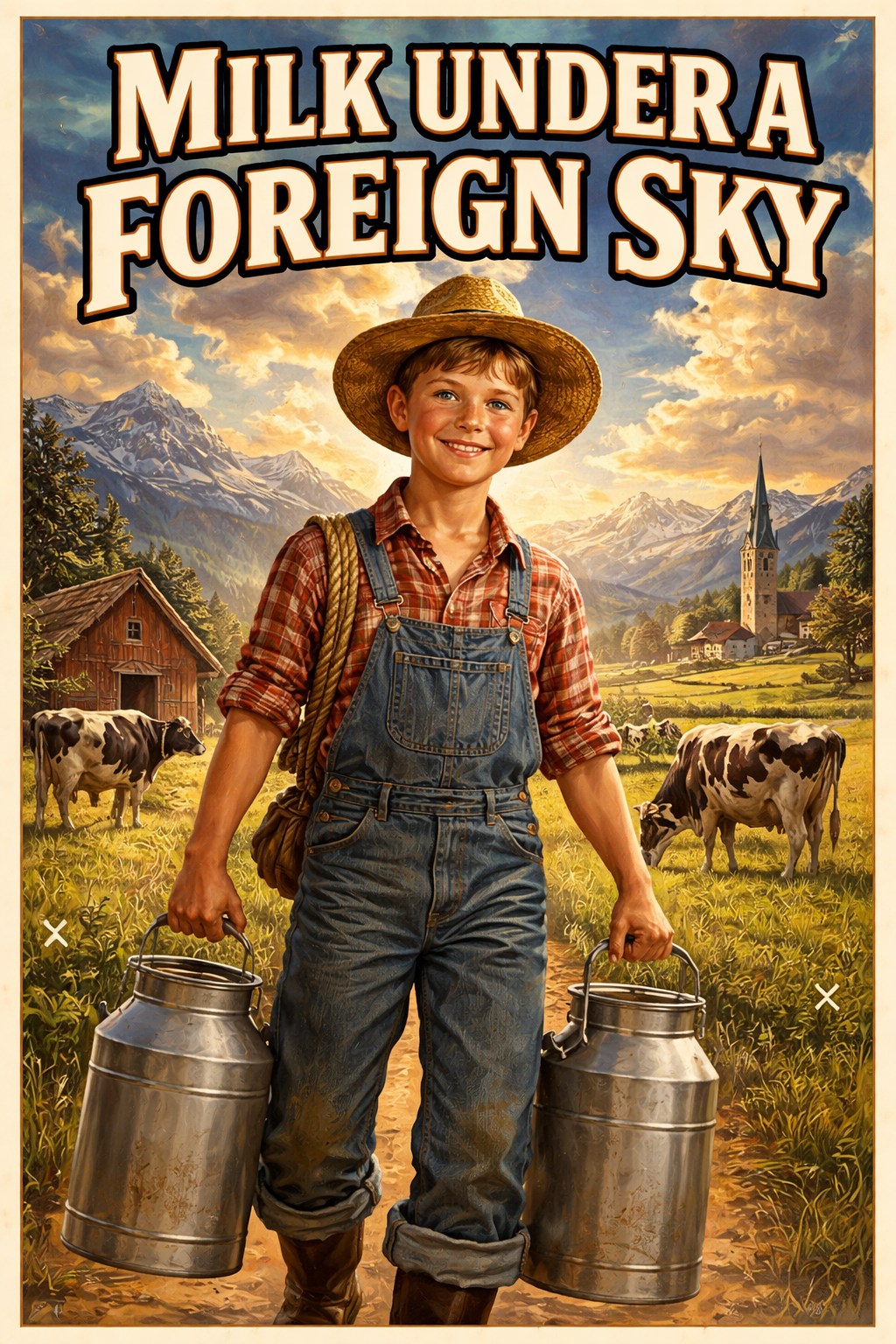
When Renato told his neighbors he was going to work on a dairy farm in New Zealand, some of them laughed.
“Gagatas ka ng baka?” One teased. “You’ll milk cows now?”
Renato only smiled.
Back in Bukidnon, he had grown up around cornfields and carabaos. Hard work didn’t scare him. What scared him was watching his children’s dreams shrink because of money.
His eldest son wanted to become an engineer. His youngest daughter dreamed of being a teacher. But farming their small inherited land barely covered daily expenses.
So when the opportunity came to work as a dairy farm worker abroad. Renato grabbed it even if it meant leaving everything familiar behind.
The first morning on the farm in Waikato, he woke before 4:00 a.m. The air was cold and damp, unlike the humid mornings of Mindanao. A thin fog rested over endless green pastures.
He stood outside the bunkhouse for a moment, breathing in the scent of grass and earth. The sky above was wide and pale, slowly brightening.
The farm manager, a tall Kiwi named Mark, handed him rubber boots and gloves.
“Milking starts early,” mark said with a friendly nod. “Cows don’t wait.”
Renato quickly learned that dairy farming followed a strict rhythm. The herd hundreds of black and white cows moved calmly toward the milking shed twice a day. Machines hummed as suction cups were attached carefully to each cow.
The first time Renato tried attaching the milking clusters, his hands trembled slightly.
“Gentle but firm,” mark instructed. “They feel your energy.”
Renato exhaled slowly and tried again.
He spoke softly to the cow in Bisaya without thinking. “Sige lang, Inday.”
Mark chuckled. “You talk to them?”
Renato smiled shyly. “Back home, we talk to our animals too.”
Soon, the routine became second nature. Wake before dawn. Guide cows to the shed. Clean equipment. Monitor milk flow. Record numbers. Clean again. Repeat in the afternoon.
The work was physical and constant. His back ached from bending. His hands grew rough despite gloves. Some days rain poured endlessly, soaking the fields and turning soil into mud.
But unlike construction sites of factories, the farm felt open. Free. He worked under sky instead of concrete ceilings.
During breaks, Renato would stand by the fence, watching cows graze peacefully. The hills rolled endlessly into the distance. Sometimes he felt small. Sometimes he felt grateful.
Every payday, he sent most of his salary home.
His wife, Liza, would message him updates.
“Nakapag-enroll na SI kuya.”
“Naayos na Ang bubong natin.”
“Bumili Tayo ng bagong ref.”
Each message felt like a warm cup of fresh milk after a cold morning shift.
Still, homesickness came quietly.
On Sundays, when work was lighter, Renato cooked adobo in the shared kitchen with two other Filipinos workers. The smell filled the bunkhouse, blending strangely with the scent of cattle from outside.
They laughed, shared stories, and talked about home.
“Miss mo na?” One would ask.
“Oo,” Renato would admit. “Lalo na pag may fiesta.”
He missed the sound of karaoke drifting through their barangay. He missed holding his daughter’s hand during church. He missed the warmth of Philippine sunshine.
New Zealand was beautiful but it wasn’t home.
One particularly cold winter morning, frost covered the grass like white powder. Renato’s breath formed clouds in front of his face as he walked to the shed.
Inside, one cow seemed restless,
Mark frowned. “She’s close.”
Renato understood. The cow was about to give birth.
They moved her gently to a separate pen. Hours passed as Renato stayed close, speaking softly, steadying her when she shifted.
Finally, the calf arrived small, wet, trembling.
Renato felt something stir in his chest as the calf tried to stand on shaky legs.
“Good job,” Mark said, clapping his shoulder. “You’ve got the touch.
Renato smiled down at the newborn calf. Life beginning under a foreign sky.
That night, he video-called his family and told them about it.
“Papa, what did you name the baby cow?” His daughter giggled.
Renato laughed. “I don’t get to name them. But in my heart, I call her hope.”
Because that’s what the farm had become for him.
Hope measured not in liters of milk, but in tuition receipts and repaired walls back home.
Months turned into years.
Renato learned to operate tractors. He monitored feed quality. He assisted in veterinary checks. His English improved. His confidence grew.
Mark eventually promoted him to herd supervisor for one section of the farm.
“You’re reliable,” Mark said simply. “You care.”
Caring was something Renato carried naturally.
On his third year abroad, his son sent him a photo wearing a hard hat at an internship site.
“Soon, Papa,” his son wrote. “I’ll build something big.”
Renato stared at the photo for a long time.
He might not be building skyscrapers or bridges.
But every dawn milking session, every muddy boot step, every aching muscle those were bricks in his children’s future.
One quiet evening, after the second milking, Renato stayed behind near the pasture fence. The sunset painted the sky orange and purple. Cows grazed lazily, unaware of borders or remittances or sacrifices.
He thought about how milk traveled from cow to tank, from tank to factory, from factory to supermarket shelves.
Quiet work. Essential work.
Like his.
When his contract finally ended, Renato faced a choice: renew or return home for good .
He stood one last time in the milking shed, listening to the steady hum of machines he had grown used to. He ran a gloved hand along the metal railing, feeling gratitude instead of exhaustion.
At the airport, as he waited to board his flight back to the Philippines, he carried more than luggage.
He carried savings for a small dairy project of his own. He carried knowledge about herd management. He carried years of discipline and resilience.
When he landed in Cagayan de Oro and saw Liza and the children waiting, his heart nearly burst.
His daughter hugged him tightly. “Papa, are you staying?”
Renato knelt and smiled.
“Yes,” he said softly. “This time, I’ll milk cows in our own land.”
Months later, a small dairy shed stood beside their house in Bukidnon. It wasn’t large. Only a few cows.
But every morning before sunrise, Renato walked out under the Philippine sky no longer foreign and began his work again.
The rhythm felt familiar.
Milk flowed into metal pails.
His children prepared for school inside the house he helped improve.
And as sunlight warmed the fields, Renato realized something powerful:
He had crossed oceans to gather strength.
But his roots had always been here.
Sometimes, dreams don’t come with wings.
Sometimes, they come with hooves and steady, patient hearts.