
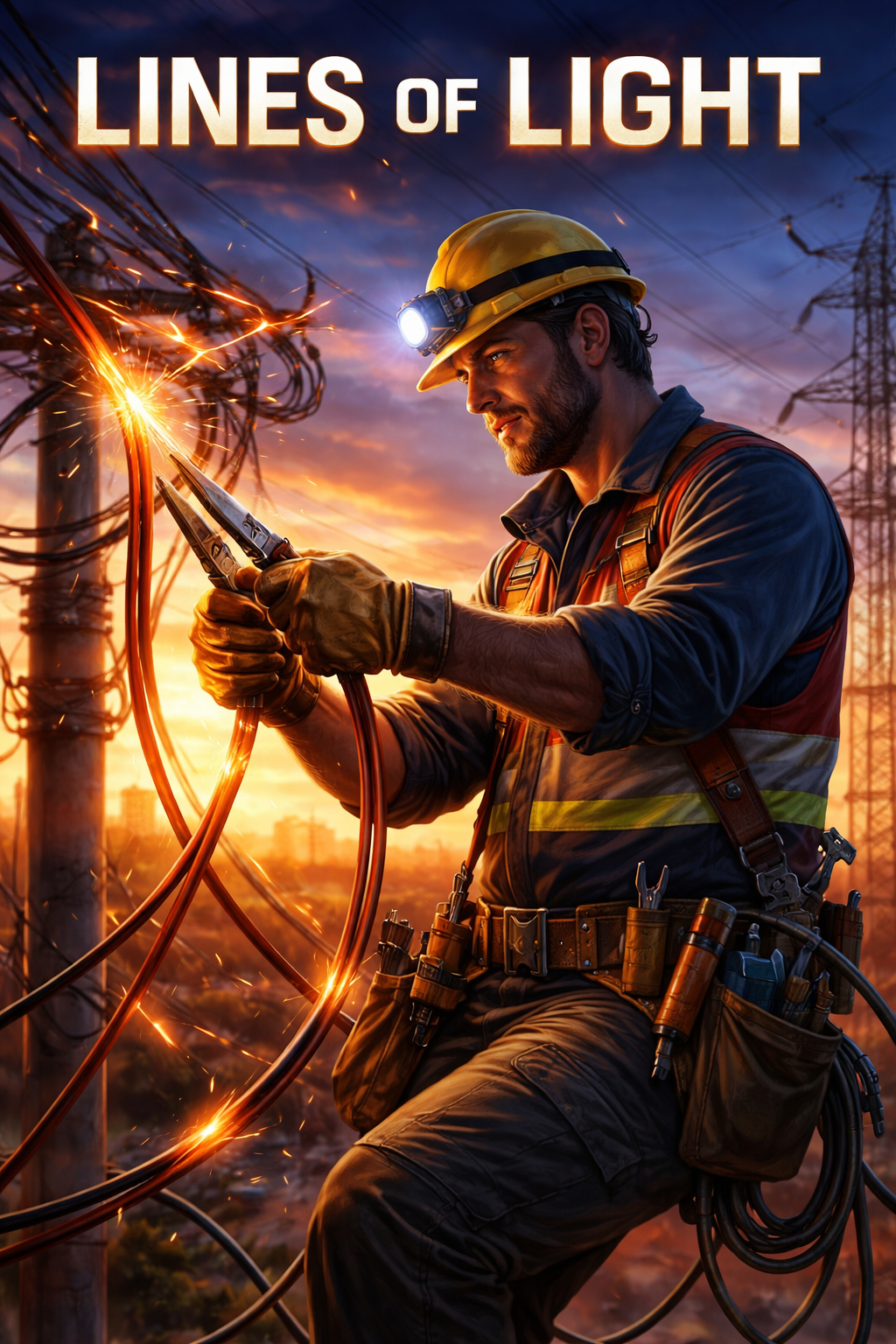
When Marvin first learned how to strip a wire, he was twelve years old, standing barefoot on the concrete floor of their small house in Tondo. His uncle, a neighborhood electricians, guided his hands carefully.
“Electricity is invisible,” his uncle warned. “Respect it. You cannot see it, but it can change everything.”
Years later, those words followed Marvin all the way to Qatar.
He didn’t leave the Philippines because he wanted adventure. He left because darkness had started creeping into his home in other ways unpaid bills, overdue rent, his mother’s maintenance medicines. His small electrical repair jobs around Manila weren’t enough anymore.
So he signed a contract to work as an electrician for a construction company building high-rise towers in Doha.
The first time he saw the skyline, glittering like a field of stars fallen to earth, he felt a strange mix of pride and fear. He would be working inside those towers, threading life through their walls.
Because that’s what electricity was life.
His days began before sunrise. Wearing a hard hat and steel toe boots, Marvin entered unfinished buildings that smelled of cement and metal. The structures were skeletal concrete columns, exposed beams, open floors waiting to become offices or apartments.
His job was to install conduits, pull cables, connect breaker panels, and test circuits. It required precision. One wrong connection could cause outages or worse.
The first week, his hands shook lightly when working on high platforms. He wasn’t afraid of heights exactly, but the thought of making a mistake far above ground made his chest tighten.
“Slow is smooth. Smooth is fast,” said Tariq, a Jordanian senior electrician who supervised their team.
Marvin nodded, absorbing everything. He studied blueprints at night in their shared accommodation, tracing lines with his finger until he understood the pathways by heart.
Back home, he used to fix flickering lights and faulty outlets. Here, he was wiring entire floors of skyscrapers.
The responsibility felt heavy but empowering.
During lunch breaks, he would sit with other Filipinos workers under a shaded area near the site.
“Kamusta sa Bahay?” Someone would ask.
“Okay naman,” Noel would reply. “Padala ulit Ako next week.”
Sending money home became a rhythm. Every payday, he lined up at the remittance center, carefully filling out forms. His mother would message once it arrived.
Nakabayad na Tayo ng kuryente. Salamat, anak.
Each message felt like switching on a light.
Work wasn’t always smooth.
One afternoon, while testing a distribution board, a sudden spark burst from a loose connection made by another worker. The flash startled everyone nearby.
“Power off!” Tariq shouted.
Marvin’s heart pounded. He quickly traced the issue, tightening terminals and double-checking insulation. The mistake could have caused serious damage later.
Afterward, Tariq pulled him aside.
“You noticed fast,” he said. “Good electrician watches details.”
That night, Marvin lay in his bunk bed staring at the ceiling. He realized something important: his job wasn’t just about connecting wires. It was about preventing unseen dangers. Protecting future residents who would never know his name.
Like many OFWs, his sacrifices were invisible just like electricity.
He missed home fiercely.
He missed Sunday lunches with his mother’s sinigang steaming on the table. He missed noisy barangay fiestas, karaoke echoing late into the night. He missed his younger sister asking him to fix her phone charger.
On his birthday, he spent the evening on a video call.
“Kuya, look!” His sister said, pointing the camera at a small cake with candles.
He smiled widely. “Save me a slice.”
After the call ended, silence returned to the room. His roommates were asleep. The hum of the air conditioner filled the space.
Sometimes loneliness felt like a power outage sudden and suffocating.
But he endured.
Months turned into a year. The tower he had helped wire slowly transformed. Walls were painted. Glass panels installed. Elevators tested. Lights flickered on the floor by floor.
The first time the entire buildings was fully powered, Marvin stood near the control room, watching as switches were flipped.
One by one, lights illuminated across dozens of floors.
The building glowed against the night sky.
A quiet pride settled in his chest.
He had helped bring it to life.
One evening, while working late to finish a section, he met a cleaning lady from Nepal named Mira. She was assigned to prepare the finished floors for inspection.
“You worked on these lights?” She asked, glancing upward.
“Yes,” Marvin replied modestly.
“They are very bright,” she smiled. “Make the place feel safe.”
Her words lingered.
Safe.
He thought about his mother back home, now able to sleep without worrying about disconnection notices. He thought about his sister studying under a stable ceiling light he paid for.
Light meant safety, Stability. Hope.
In his second year, Marvin was promoted to team lead for a smaller project a residential building near the waterfront. The raise wasn’t huge, but it meant progress.
He trained new workers patiently.
“Check twice,” he would remind them. “Electricity doesn’t forgive carelessness.”
He found himself repeating his uncle’s old lessons.
One particularly challenging week, a deadline loomed. The client demanded faster completion. Pressure built.
Marvin refused to rush unsafely.
“We follow standards,” he told the supervisor firmly. “Better late than dangerous.”
It was a risk to speak up but he did.
The project finished only slightly behind schedule. During inspection, not a single fault was found.
Tariq clapped his shoulder. “You lead well.”
That night, Marvin allowed himself a rare treat a takeaway meal from a Filipino restaurant in the city. As he ate adobo alone in his room, he felt something stronger than homesickness.
He felt growth.
Two and a half years after arriving in Qatar, Marvin stood outside the completed residential building. Families were beginning to move in. Children ran through the lobby. Lights glowed warmly behind glass windows.
He imagined them flipping switches in their apartments, unaware of the hands that connected those circuits.
And that was okay.
Because back home in Tondo, another small house was also glowing steadily electric bills paid on time, repairs completed, his sister now enrolled in college studying engineering.
“Because of you, Kuya,” she said proudly over the phone.
Marvin smiled.
“No,” he corrected gently. “Because we didn’t give up.”
When his contract ended, he returned to the Philippines with savings and experience far beyond what he had before.
He started a small electrical services business, painting his name on a modest signboard: Marvin Electrical Solutions Safe. Reliable. Honest.
On his first local project, as he connected wires inside a modest family home, he felt the same sense of purpose he had felt in Doha.
Electricity was invisible.
But its impact was powerful.
Just like the sacrifices of an OFW electrician who spent years far from home, quietly running lines of light across foreign skies so that his own home would never sit in darkness again.