
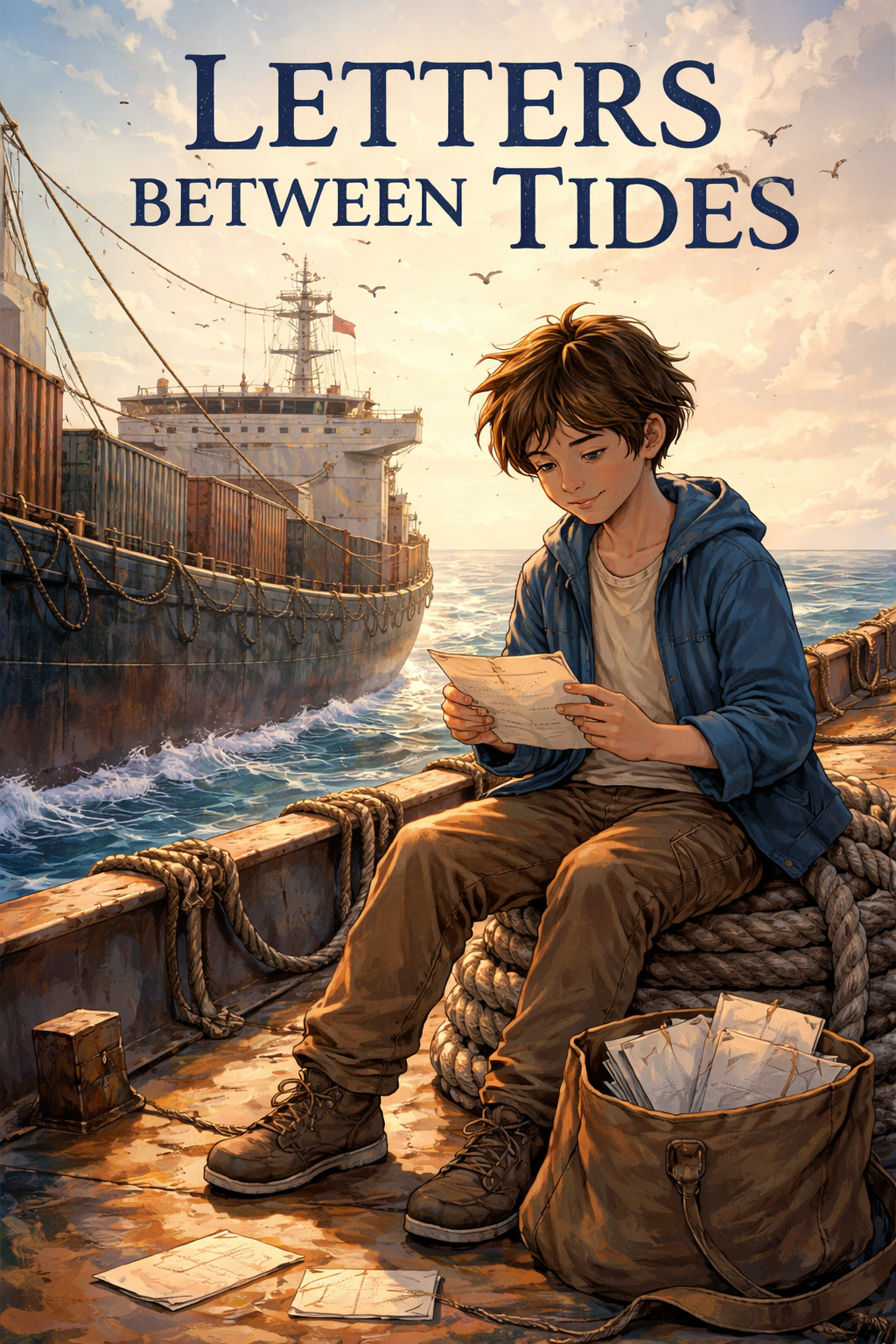
The sea had always been part of Daniel’s life.
Back home in Iloilo, he grew up watching fishing boats return at dawn, their hulls heavy with catch and hope. He used to sit on the shore as a boy, imagining what it would be like to travel beyond the horizon. He did not know then that one day, he would cross oceans not as an explorer, but as an overseas Filipino worker chasing stability.
At thirty-two, Daniel found himself standing on the deck of a cargo vessel bound for the Middle East. He worked as a seafarer assigned to engine maintenance long hours below deck where heat pressed against skin like a living thing. The ship’s engine room roared constantly, a metallic heartbeat that never truly rested.
He had taken the job after typhoons destroyed their small family store. Insurance barely covered repairs. Debts multiplied. With two young children and aging parents depending on him, Daniel signed the contract without hesitation.
His wife cried quietly the night before he left.
“It’s only for a few years.” He promised. Though they both understood how quickly years could stretch.
Life at sea followed a strict rhythm. Four hour shifts. Maintenance checks. Greasing bearings. Monitoring pressure gauges. The smell of fuel clung to his uniform no matter how often he washed it. Sleep came in fragments, broken by alarms or schedule changes.
Yet what weighed on him most was not the physical exhaustion. It was distance.
Signals were weak in open waters. Sometimes, he waited days before the ship reached a port with enough connectivity to send messages. When he finally connected his phone to the ship’s Wi-Fi, notifications flooded in photos of school projects, voice messages from his daughter singing, short updates from his wife about bills and repairs.
He replied with voice recordings of his own, careful to sound cheerful.
“Papa is okay here,” he would say. “The sea is calm.”
But the sea was not always calm.
One night in the Indian Ocean, a storm rose without much warning. The sky darkened, waves slamming against the vessel with frightening force. Below deck, Daniel and his fellow crew members secured loose equipment, their movements quick and practiced. The engine room shook violently, metal clanging against metal.
Fear crept into his chest, but he forced himself to focus. He thought of his children sleeping peacefully thousands of miles away. He tightened bolts with steady hands, whispering silent prayers.
After hours of turbulence, the storm passed. The ship endured.
Standing alone on deck later, Daniel stared at the vast darkness around him. The ocean stretched endlessly, indifferent and powerful. In that moment, he felt both incredibly small and fiercely determined.
He was here for a reason.
Each month, his remittances paid for his son’s asthma medication and his daughter’s school tuition. His parents no longer worried about unpaid electric bills. Slowly, they rebuilt the store stronger walls, sturdier roofing.
Still, guilt lingered like salt on skin.
He missed his son’s first basketball game. He missed his daughter’s dance recital. During birthdays, he watched celebrations through a screen, smiling while his heart ached.
One evening while docked at a busy port, Daniel bought postcards from a small shop near the harbor. The image showed sunsets, lighthouses, and crowded markets. He began writing letters during quiet hours after his shift.
He wrote about the colors of the sea at dawn how it turned from deep indigo to shimmering gold. He described dolphins racing beside the ship and flying fish skimming the waves. He told stories of different ports and the kindness of strangers who offered directions or smiles.
He did not write about exhaustion.
He did not write about loneliness.
Instead, he folded each postcard carefully and mailed them whenever possible. Weeks later, his wife sent photos of the children holding his letters, reading them aloud as if they were treasure maps.
“Papa’s adventure,” his daughter called them.
That small detail warmed him more than any tropical sun.
Months blurred together. Contracts renewed. Ports changed. But Daniel remained anchored by one dream: to return home permanently and open a modest repair shop near the rebuilt family store. He wanted to fix engines on land instead of maintaining them at sea. He wanted to walk his children to school instead of waving through video calls.
During his third year abroad, his father fell I’ll. The news reached him while the ship was crossing another vast stretch of ocean. Helplessness gripped him. Flights were impossible until the next scheduled port.
He spent nights pacing the narrow corridor outside his cabin, staring at framed safety notices on the wall. For the first time, he questioned everything. Was the sacrifice worth it? What was the value of earning abroad if he could not be present when needed most?
When the ship finally docked, he called home immediately. His father’s voice sounded weak but steady.
“Anak, don’t worry.” His father said. “We are proud of you. Just do your work safely.”
Pride.
That word steadied Daniel more than the strongest anchor.
He returned to his duties with renewed clarity. He realized that being an OFW was not about choosing work over family. It was about choosing family so fiercely tat one was willing to endure distance.
By his fourth, savings had grown enough to begin construction on the repair shop. His wife sent photos of concrete being poured, of walls rising slowly. His children painted a small sign with his name on it.
The sea continued its endless motion. Storms came and went. Engines roared. But Daniel’s horizon began to look different not as something far away, but as something approaching.
On his final contract, he stood on deck during sunset and watched the sky blaze orange and crimson. The wind carried the familiar scent of salt. Instead of longing, he felt gratitude.
The sea had taken him far from home, but it had also given him the means to return stronger.
When he finally stepped off the plane back in the Philippines, his children ran toward him with arms wide open. The air felt warmer than he remembered. The noise of tricycles and laughter filled his ears like music.
Weeks later, as he opened the doors of his small repair shop for the first time, he noticed something pinned to the wall beside his workbench.
It was one of his postcards a lighthouse standing tall against crashing waves.
His daughter had written beneath it: “Even when the sea is big, Papa always comes home.”
Daniel traced the words gently, eyes shining.
The tides had carried him across oceans. They had tested his strength and patience. But in the end, they had also brought him back to solid ground, to family dinners, to ordinary mornings filled with sunlight and rice cooking on the stove.
And as he tightened the first bolt in his own shop, he realized something simple yet powerful:
He had crossed the sea not just to earn a living but to build a life worth coming home to.