
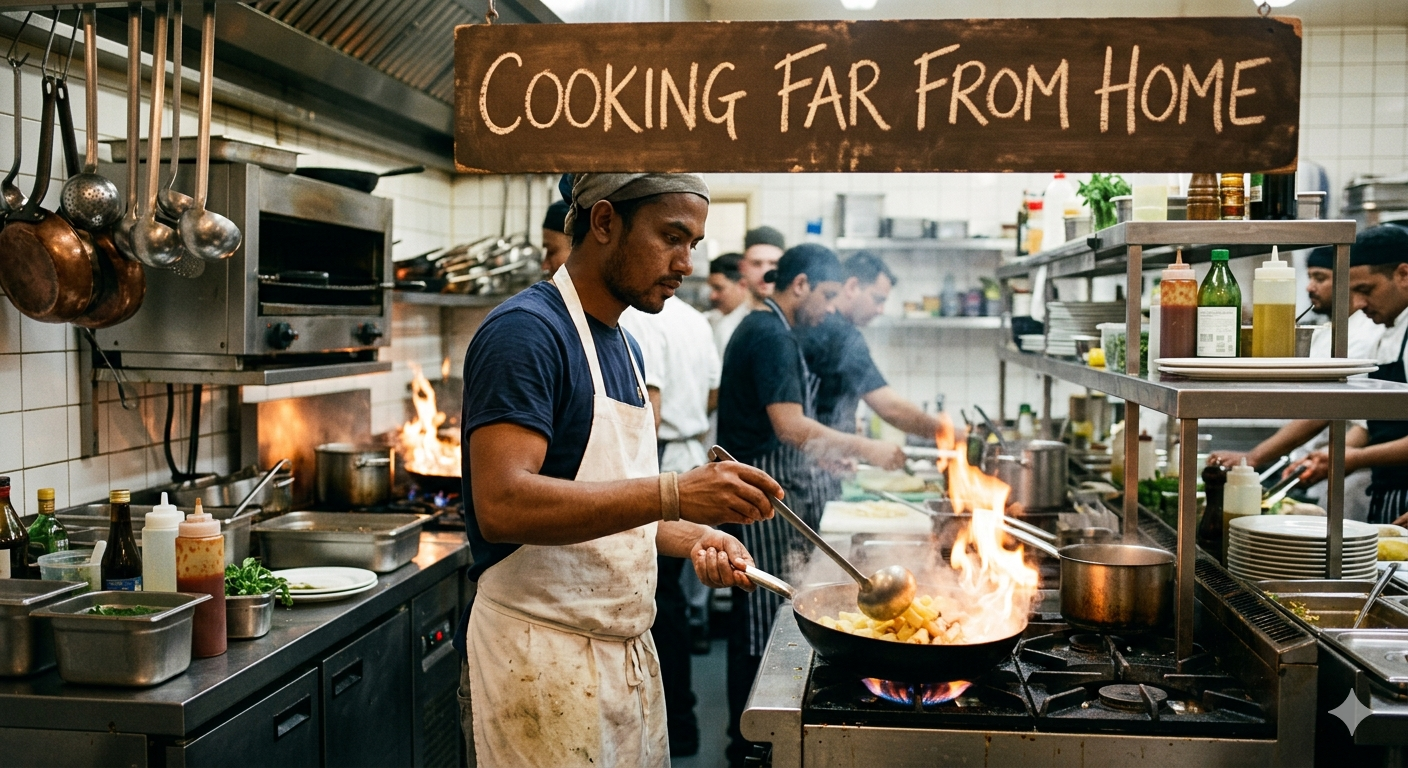
The kitchen was already busy when Benito arrived for his shift.
Pans clanged, knives chopped vegetables quickly, and the smell of garlic and spices filled the air.
In the middle of the busy kitchen of a Filipino restaurant in Canada, Benito tied his apron and prepared for another long day.
Benito grew up in Quezon Province, where his family lived near coconut farms. His mother loved cooking for neighbors during fiestas, and Benito often helped her prepare food.
He chopped vegetables, stirred soups, and learned how different ingredients created delicious flavors.
“Cooking is about love,” his mother always told him.
Benito remembered those words as he grew older.
After finishing high school, he worked as a kitchen helper in a small restaurant in Manila. Slowly, he learned how to cook popular dishes like adobo, sinigang, pancit, and fried rice.
But the salary was small.
With two younger siblings still studying, Benito wanted to help his family more.
When he heard about job opportunities for restaurant cooks in Canada, he decided to apply.
It was a big step.
He had never traveled so far before. At the airport, his parents hugged him tightly.
“Mag-ingat ka,” his father said. Benito nodded. “I will.”
In Canada, Benito worked in a Filipino restaurant that served both Filipino migrants and curious locals who wanted to try Filipino cuisine.
The restaurant kitchen was busy every day. Customers ordered dishes that reminded them of home.
Benito’s job was to cook meals quickly while maintaining good taste and quality.
Each morning, he helped prepare ingredients. Vegetables were washed and sliced. Meat was marinated. Sauces were mixed.
By lunchtime, the kitchen became full of activity. Orders arrived quickly. “Two chicken adobo!” “One pancit!” “Three fried rice!”
Benito moved quickly between the stove and preparation table. Oil sizzled in hot pans. Steam rose from boiling pots.
Even though the work was tiring, Benito enjoyed cooking. Every dish he prepared reminded him of his family back in Quezon.
Sometimes Filipino customers thanked the kitchen staff.
“This tasted like home,” one customer said one evening. Benito smiled proudly.
Moments like that made the hard work meaningful. Life abroad was not always easy.
Canada’s winters were very cold compared to the warm climate of the Philippines. Snow covered the streets for months. But Benito adjusted slowly.
After work, he returned to a shared apartment with other Filipinos workers. They cooked meals together and talked about their families.
Every month, Benito sent money back to Quezon province. His siblings were able to continue their education.
His parents repaired their house and improved their small coconut farm. Each improvement reminded Benito why he worked so far away.
One evening, the restaurant became extremely busy. Customers filled every table. Orders kept coming. The kitchen staff worked quickly to keep up.
Despite the pressure, Benito stayed calm and focused. Dish after dish left the kitchen.
Finally, when the last order was served, the team sighed with relief. The restaurant owner approached Benito. “You handled the kitchen very well tonight,” he said. Benito smiled.
Years of experience had made him confident in his skills.
After several years abroad, Benito returned home to Quezon for a vacation. His family welcomed him with warm hugs. His siblings had grown older and more successful. Their house looked stronger and more comfortable.
One evening, Benito cooked dinner for his family. The familiar smell of garlic and spices filled their kitchen once again.
His mother tasted the food and smiled proudly. “You’ve become a great cook,” she said.
Benito looked around the table at his happy family. He realized something simple but powerful. Food has a special way of bringing people together.
Wether in a small house in Quezon or a busy restaurant thousands of kilometers away.
And for Benito, every meal he cooked abroad carried the same important ingredient love for the family waiting for him at home.