
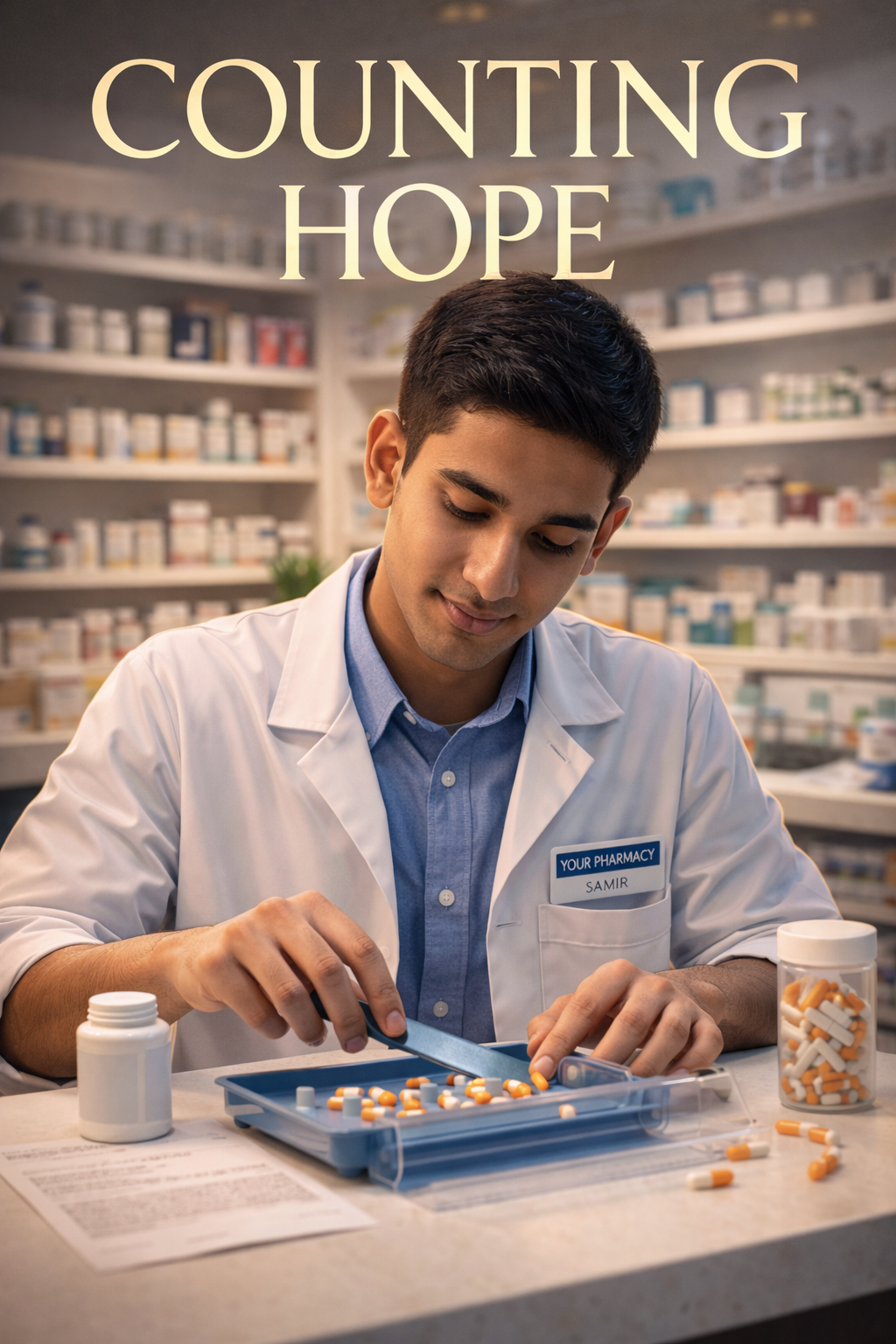
When Gerald walked into the pharmacy, the smell surprised him.
It wasn’t unpleasant. It was clean and faintly chemical, mixed with the scent of paper bags and antiseptic. It reminded him of the small rural clinic near his hometown in Iloilo, where his mother once worked as a volunteer health aide.
But this pharmacy stood thousands of kilometers away in Canada, inside a busy shopping center in Vancouver. Fluorescent lights buzzed softly above neatly arranged shelves filled with vitamins, cough syrups, and pain relievers.
Gerald adjusted his name tag: Pharmacy Assistant.
It had taken him two years to reach this moment.
Back in the Philippines, Gerald had studied two years of pharmacy before financial problems forced him to stop. When his father got sick and their small fishing boat broke down, the family’s savings vanished quickly. Gerald left school and worked odd jobs, delivering water gallons, assisting at a sari-sari store, even helping a local doctor organize medicine supplies.
So when an overseas employment opportunity appeared for a pharmacy assistant in Canada, he applied with cautious hope. It meant leaving his family, but it also meant a salary that could pay for his father’s medication and his younger sister’s college tuition.
His first day was overwhelming.
Customers line up with prescriptions. Phones rang. The printer spat out labels faster than he could read them.
“Gerald, can you count thirty tablets of amoxicillin?” The pharmacist called from behind the counter.
“Yes, ma’am,” he replied quickly.
He placed the small white tablets into the counting tray, sliding them carefully with the spatula.
One. Two. Three.
In pharmacy work, accuracy meant everything. One wrong count, one mislabeled bottle, and someone’s health could be at risk.
By the end of the day, his feet ached and his brain felt full. But as he walked home under the cool evening air of Vancouver, he felt something steady inside him.
He was working again in the world of medicine.
Weeks turned into months. Gerald learned the rhythm of the pharmacy: mornings filled with seniors picking up blood pressure medication, afternoons with parents buying fever syrup for their children, evenings with tired office workers grabbing vitamins and pain relievers.
He learned to read doctor’s handwriting, which often looked like secret codes. He memorized common medications and their storage requirements.
“Metform in aisle three,” he’d say automatically.
“Insulin goes straight to the refrigerator.”
His supervising pharmacist, Dr. Patel, noticed his dedication.
“You’re careful,” she told him one afternoon while reviewing prescriptions. “That’s the most important quality in this job.”
Gerald smiled shyly. Careful had always been his way of surviving.
Every Friday night, he sent money home.
His mother would call through video chat.
“Gerald, your father’s medicine is overed this month,” she would say, relief clear in her voice.
His sister would wave from behind her textbooks.
“Kuya, I passed my exams!”
Those moments made the long shifts worth it.
But the job wasn’t always easy.
One winter afternoon, an elderly man approached the counter, clutching a prescription with trembling hands.
“I… I think the doctor said this will help my heart,” the man said softly.
Gerald checked the prescription. It was a new medication for heart rhythm control.
He noticed the man looked confused, his eyes scanning the labels on the shelves as if everything blurred together.
Gerald gently explained how the medication worked, how often to take it, and why timing mattered. He wrote the schedule clearly on the bottle label.
The man nodded slowly.
“Thank you,” he said. “I live alone. Sometimes I forget things.”
After he left, Gerald watched him carefully walk toward the door, moving slowly but steadily.
In that moment, Gerald realized something important.
His job wasn’t just counting pills.
It was protecting people in small, quiet ways.
Winter in Vancouver brought rain instead of snow most days. The gray skies sometimes made Gerald feel homesick. He missed the warm sun of Iloilo, the salty small of the sea, and the laughter of neighbors gathered outside in the evening.
Here, people moved quickly. Conversations were short. Everyone seemed busy.
But inside the pharmacy, Gerald began to build small connections.
Mrs. Kim, who bought arthritis medication every month, always asked about his family.
A construction worker named Daniel joked every time he picked up muscle pain tablets.
“You pills keep me working, man,” he would laugh.
And there was little Mia, a six-year old girl who came often for asthma medication. She once handed Gerald a small drawing of a smiling pharmacist wearing a cape.
“My hero,” she wrote underneath in crooked letters.
Gerald kept that drawing inside his locker.
One day, Dr. Patel called him into her office.
“I’ve noticed you studying during your breaks,” she said.
Gerald nodded nervously. He had been reviewing pharmacy textbooks online, trying to refresh what he had once learned in college.
“I never finished my pharmacy degree,” he admitted.
Dr. Patel leaned back thoughtfully.
“There are bridging programs here,” she said. “If you continue studying, you might eventually become a licensed pharmacy technician or even a pharmacist.”
The idea stunned him.
For years, that dream had felt impossible.
Now, it suddenly seemed close enough to touch.
That night, Gerald sat in his small apartment and opened his laptop. He searched for programs, requirements, exams.
The path would not be easy. It would mean studying after long shifts, saving money for tuition, and sacrificing even more sleep.
But he smiled.
He had done harder things before.
Months later, Gerald enrolled in evening classes.
His routine became exhausting but purposeful: work from morning until late afternoon, classes in the evening, studying past midnight.
Still, every time he placed pills into a bottle, every time he handed someone the medication they needed, he remembered why he had started this journey.
One rainy evening, as Gerald locked up the pharmacy after closing, Dr. Patel stood beside him.
“You’ve come a long way,” she said.
Gerald looked through the glass doors at the glowing aisles of medicine.
“Not far enough yet,” he replied with a small smile.
Outside, the city lights reflected on wet streets. People hurried past with umbrellas, unaware of the quiet work happening inside pharmacies across the city.
Gerald walked home through the drizzle, hands in his jacket pockets.
In his mind, he could already see the future a white coat, his name printed on a license, his family watching proudly from across the ocean.
For now, though, he was content doing what he did best.
Counting carefully.
Labeling precisely.
And offering hope, one small bottle at a time.