
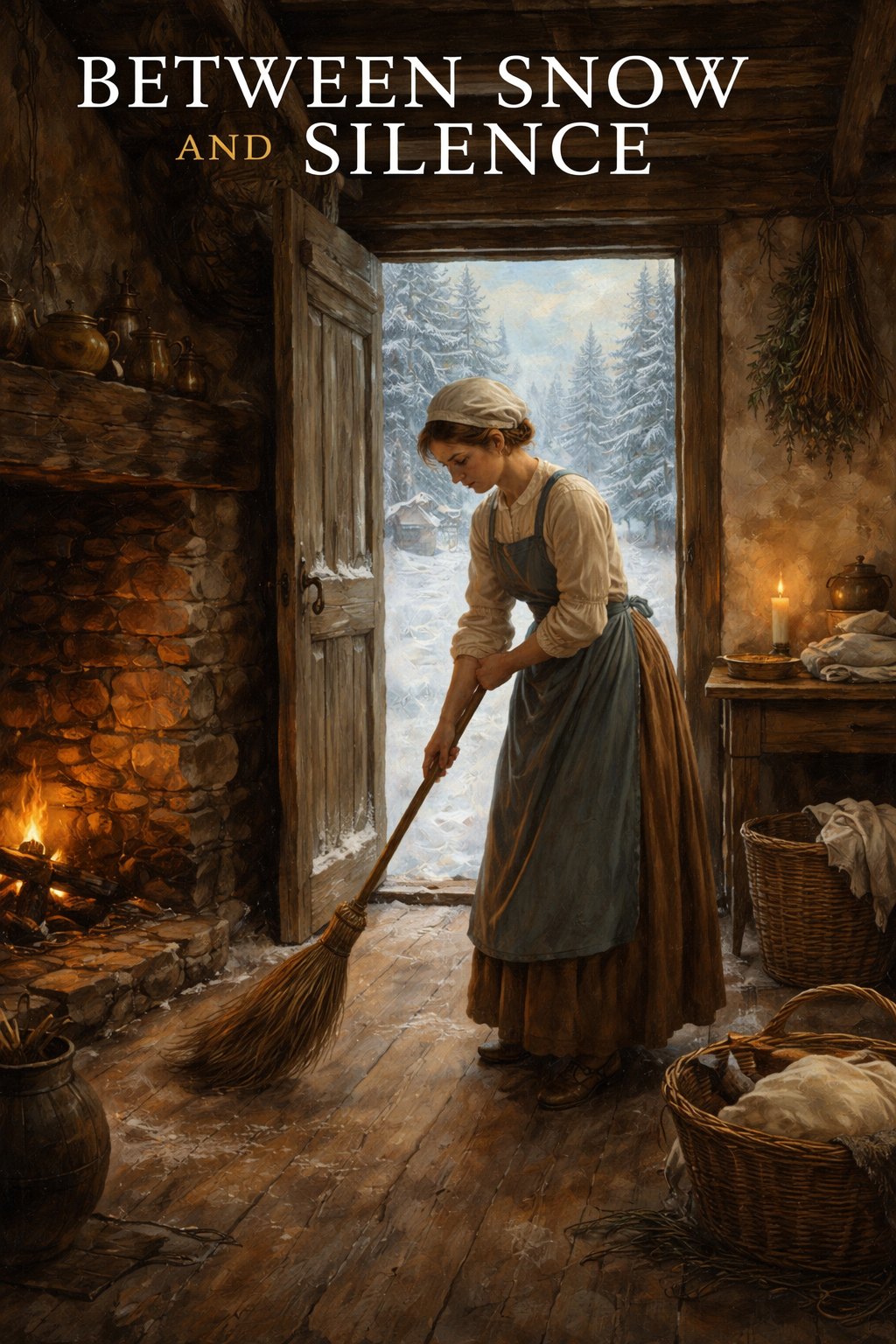
When Alina stepped out of the airport in Warsaw, winter greeted her like an unexpected supervisor cold, strict, and impossible to ignore. Snow fell in soft, endless sheets, covering the unfamiliar city in white. She tightened her borrowed coat around her body and whispered to herself, “Kaya ko ‘to.” She had crossed continents before in her dreams, but this was the first time she crossed them in real life.
Back home in the Philippines, Alina had worked as a housekeeping supervisor in a small seaside hotel. But when tourism slowed and bills grew faster than hope, she made the choice many Filipinos before her had made to become an OFW. Poland was not the usual destination her neighbors spoke about. They talked about Dubai, Hong Kong, Canada. Poland sounded distant, almost mysterious. Yet the offer was clear: a housekeeping job in a three star business hotel, stable pay, free accommodation.
The hotel stood near the heart of the city, a tall building of glass and steel that reflected gray skies. On her first day, she was introduced to Marta, the head housekeeper. Marta spoke English quickly, with clipped precision. Alina caught every third word and relied on gestures for the rest. “Room. Clean. Time twenty minutes,” Marta said, tapping her watch.
Twenty minutes per room.
Alina nodded.
The first room she cleaned in Poland was different from any room she had cleaned before. The heating hummed constantly. The windows were sealed tight against the cold. Guests left muddy footprints from melted snow instead of sandy traces from the beach. She learned quickly that winter housekeeping meant salt stains on boots, wet carpets near doors, and radiators that gathered dust faster than she expected.
Language became her second job. Every night, after scrubbing sinks and replacing towels, she practiced Polish phrases from a small notebook she kept in her apron pocket.
“Dzien dobry’ Good morning.
“Dziekuje” Thank you.
“Przepraszam” Sorry.
The words felt heavy on her tongue at first, but she carried them like tools. Slowly, they began to fit.
Her coworkers came from different corners of the world Ukraine, Belarus, even a soft-spoken woman from Vietnam. In the housekeeping storage room, between stacks of linens and cleaning carts, stories were exchanged in broken English and shared laughter. They compared recipes, winter struggles, and the ache of missing home.
Snow became her quiet companion. She saw it every morning through the hotel lobby’s tall windows. At first, if felt lonely white and endless, like silence stretching too far. But over time, she began to find beauty in it. On her days off, she walked along the Vistula River, watching children build snowmen while elderly couples shuffled carefully on icy paths. She learned that winters were long in Poland, but spring, when it arrived, was celebrated like a long lost friend.
One evening, a guest left behind a small note in her room. It read: “Thank you for keeping this place warm and clean. I travel often, and people like you make it easier.” It was signed only with initials. Alina folded the note carefully and placed it inside her notebook, between Polish vocabulary pages. It was a simple message, but it reminded her that housekeeping was more than invisible labor. It was comfort. It was dignity.
There were difficult days. Days when her hands cracked from chemicals and cold air. Days when she missed her children so much that video calls felt too short and too pixelated. Her youngest once asked, “Mama, why is it always night there when it’s morning here?” She tired to explain time zones, but what she really wanted to explain was sacrifice.
Money sent home paid for school tuition, medicine for her father, and a small renovation of their kitchen roof. Each remittance receipt felt like proof that the distance meant something.
In the hotel, she began to notice small details others overlooked. She folded towels with a signature touch an extra crisp edge. She arranged pillows symmetrically, as if preparing a stage. Guests rarely saw her, but they felt her work. A clean mirror. Fresh sheets. A room smelled like quiet reassurance.
Marta eventually noticed too.
“You are fast,” Marta said one afternoon, reviewing inspection sheets. “And careful. Good combination.”
Alina smiled. Praised in a foreign country felt different. It felt earned twice.
By her second year, she was trusted with training new staff. She demonstrated proper bed-making techniques, efficient bathroom sanitizing, and the importance of checking hidden corners. “Guests see everything,” she would say in careful English. “Even what you think they don’t.”
Winter returned, as it always did. But this time, it did not feel as harsh. She bought her own thick coat, no longer borrowed. She could order food in Polish without panic. She had favorite aisles in the supermarket and knew which tram to take without checking maps.
On Christmas Eve, she was invited to Marta’s home for Wigilia, the traditional Polish dinner. Twelve dishes were served, including beet soup and dumplings. Though far from Filipino Noche Buena, the warmth around the table felt familiar. They shared stories, and when Alina described tropical Christmases back home humid air, fireworks, mangoes everyone listened with curiosity.
In that moment, she realized something powerful: she was not just surviving in Poland. She was weaving herself into its fabric, thread by thread.
Yet her heart remained divided.
She dreamed of the day she would return home for good. She imagined opening a small cleaning services business, using everything she learned abroad efficiency systems, quality standards, time management. She pictured training other women in her town, teaching them that housekeeping was not “just” cleaning. It was professionalism. It was pride.
On her third anniversary in Poland, she visited the city center after work. Snowflakes drifted lazily under the streetlights. She stood quietly, hands tucked in her coat pockets, and allowed herself to reflect.
She had arrived afraid of winter. Afraid of language. Afraid of loneliness.
Now she carried winter in her stride. She spoke enough Polish to joke with reception staff. She had built friendships that steady despite cultural gaps. Most importantly, she had proven to herself that courage did not always roar. Sometimes it scrubbed bathtubs at 6 a.m. Sometimes it changed bed linens with aching shoulders. Sometimes it endured.
Her story was not loud. It did not make headlines. But it was strong.
Back in her small rented room that night, she opened her notebook and reread the guest’s note from years ago. The paper was slightly worn at the edges.
“People like you make it easier.”
She smiled and added a new line beneath it, written in both English and Polish:
“People like me make it possible.”
Outside, the snow continued to fall over Poland quiet, steady, persistent.
Just like her.