When the plane doors opened in Dammam, a wave of dry heat rushed in like a furnace being unlatched. Joel had never felt air like that before no humidity, no sea breeze, just pure desert heat pressing against his skin.
Back home in Pangasinan, he used to joke that he knew everything about gasoline. He had worked at a small roadside station along the highway, wiping windshields, checking tire pressure, and greeting jeepney drivers by name. But Saudi Arabia was different. The gas stations here were enormous, bright, and always busy. Fuel was cheaper than bottled water. Cars lined up day and night.
He was thirty-two when he left the Philippines, a husband and father of two. His wife, Mylene, cried quietly at the airport, trying not to make a scene. Their youngest, four year old Abby, kept asking why Papa had to ride the airplane alone.
“For work,” Joel said, forcing a smile. “So I can buy you lots of crayons.”
The real reason was debt. Hospital bills from his mother’s stroke. Tuition fees. A roof that needed fixing before the next typhoon season. The offer to work as a pump attendant in Saudi Arabia wasn’t glamorous, but the salary was triple what he earned back home.
“I’ll endure,” he told Mylene before boarding. “Just two years.”
The station where he was assigned sat along a busy highway connecting Dammam to nearby industrial zones. Trucks roared in at all hours. Luxury SUVs gleamed under bright lights. The desert stretched beyond the paved roads, flat and endless.
His first week overwhelming. Instructions were given in a mix of Arabic and broken English. The other attendants were from India, Pakistan, Sudan. Everyone moved fast.
“Smile,” said Ahmed, a fellow worker from Sudan. “Customer like smile.”
Joel nodded. Smiling was something he knew how to do.
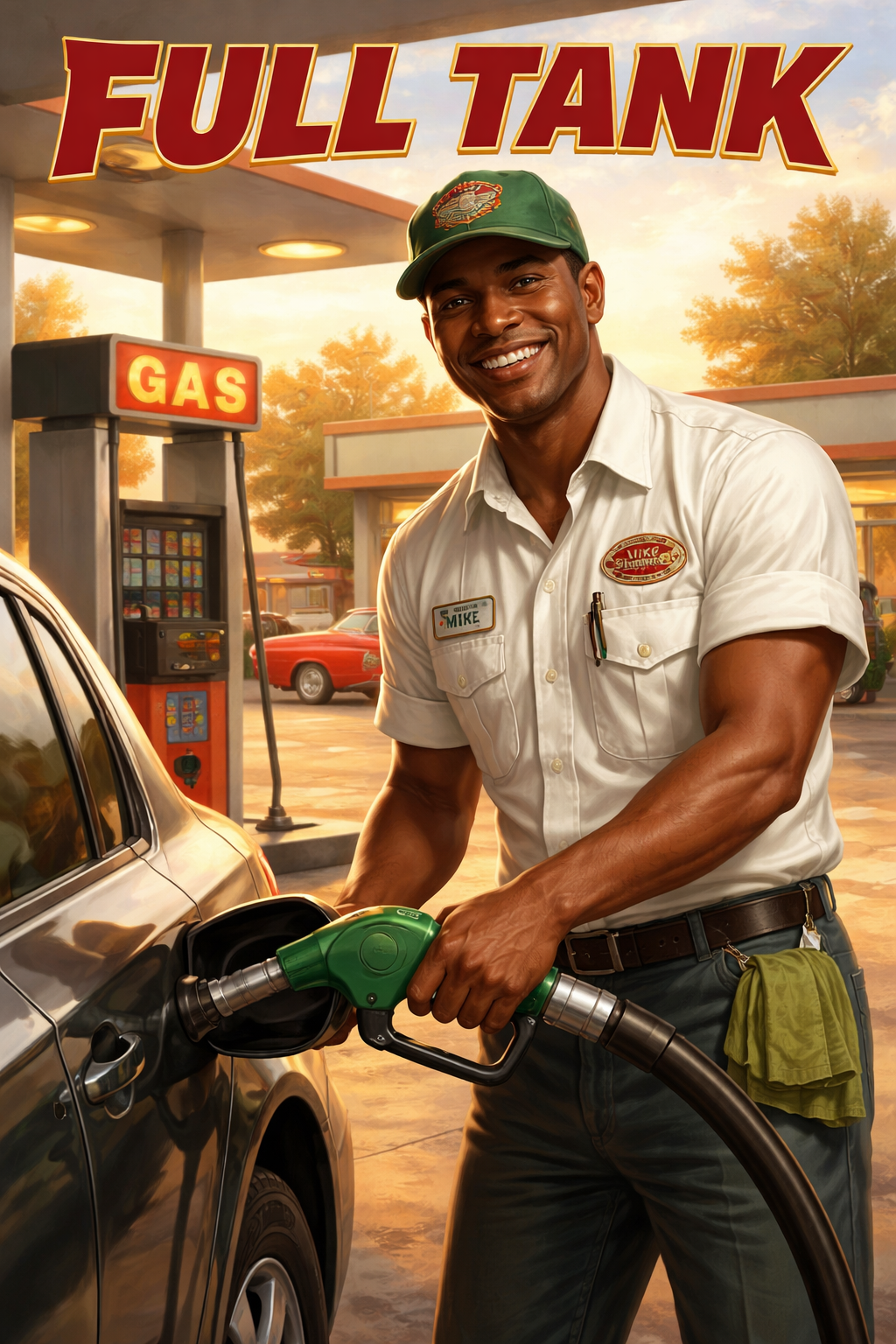
The work was simple but relentless: greet the driver, ask what type of fuel, pump, collect payment, give change. Repeat. Sometimes hundreds of times in a shift.
Under the midday sun, the metal pump handles grew hot. Sweat trickled down his back despite the shade overhead. The smell of gasoline clung to his uniform even after washing.
At night, when his shift ended, he returned to shared accommodation a cramped room with six bunk beds. The air conditioner rattled loudly but was their only shield against the desert heat.
Every evening, Joel called home.
“Did you eat already?”Mylene would ask.
“Yes,” he’d reply, even if dinner was just instant noodles.
“Abby drew something for you,” she’d say, holding up a picture to the camera usually a stick figure family with a bright yellow sun overhead.
Joel would smile, memorizing the drawing. He missed that chaos of home: the neighbor’s karaoke, the smell of frying garlic, the sound of rain on the roof. In Saudi, the sky rarely changed. It was blue and merciless by day,black and silent by night.
One afternoon, a sandstorm rolled in without warning. The horizon turned brown. Wind whipped across the highway, carrying grit that stung Joel’s face.
“Inside!” The supervisor shouted.
They retreated into the small station store as sand battered the windows. Joel watched the storm swallow the road, thinking of typhoons back home loud, wet, furious. This storm was different. It didn’t roar. It hissed.
When it cleared, everything was coated in dust.
He stepped back outside and resumed pumping fuel. Work didn’t stop for weather.
Weeks turned into months. Joel learned basic Arabic phrases: “kam?” for how much, “shukran” for thank you. Some customers were kind, offering bottled water during hot afternoons. Others barely looked at him.
One evening, a sleek white SUV pulled up. A young Saudi man sat behind the wheel, sunglasses on despite the setting sun.
“Full,” the driver said.
Joel nodded and began pumping.
The man stepped out and glanced at Joel’s name patch. “Philippines?”
“Yes,” Joel replied.
“My driver before also Filipino. Hardworking,” the man said casually.
Joel smiled. “We try our best.”
When the tank was full, the man handed him the payment and a small extra bill.
“For you,” he said.
Joel hesitated, then accepted it with a quiet “Shukran.”
It wasn’t a large amount, but it felt like recognition. A reminder that he wasn’t invisible.
Still, loneliness lingered like the smell of fuel.
On his daughter Abby’s fifth birthday, he watched the celebration through a phone screen. Pink balloons filled their small living room. Abby blew out candles while shouting, “For Papa!”
Joel turned his face away for a moment so they wouldn’t see his tears.
“I’m sorry I’m not there,” he whispered later to Mylene.
“You’re here,” she said softly, tapping the phone screen. “And you’re helping us.”
He held onto those words during the hardest shifts.
One night, just before closing, a battered pickup truck sputtered into the station. An elderly man stepped out, looking distressed. The truck refused to start after refueling.
Joel wasn’t a mechanic, but he remembered watching drivers back home tinker under their hoods. He approached carefully.
“Problem?” He asked.
The old man nodded, gesturing helplessly.
Joel checked the battery connections and noticed one was loose. With permission, he tightened it using a small wrench from the station’s emergency kit.
The engine roared back to life.
The old man’s face lit up. He clasped Joel’s hands, speaking rapid Arabic Joel couldn’t understand but the gratitude was clear.
As the truck drove away, Joel felt something warm settle in his chest. Even far from home, he could still be useful beyond pumping gas.
That night, he wrote a message to his children:
“Study hard. Be kind. Even small jobs matter.”
By his second year, he had paid off their debts. The roof at home had been repaired. They even started saving for a small sari-sari store Mylene planned to manage.
Joel began counting the months until his contract ended.
The station looked different to him now not just a workplace, but a place of lessons. He had learned patience under the scorching sun. Humility when ignored. Gratitude for simple kindness, Strength in missing home but continuing anyway.
On his final week, Ahmed slapped his shoulder. “You go home lucky man.”
Joel laughed. “Very lucky.”
On his last shift, as the sun dipped low over the desert, he pumped fuel slowly, deliberately, memorizing the rhythm he had repeated thousands of times. Card came and went. The highway hummed endlessly.
He realized something: while he filled tanks, he had also been filling something else his family’s future, one remittances at a time.
At the airport, duffel bag heavier with gifts than when he arrived, Joel felt a mixture of relief and disbelief.
Two years ago, he had stepped into Saudi Arabia uncertain and anxious. Now he was returning home steadier, his shoulders broader from more than just work.
When the plane finally landed in Manila, humidity wrapped around him like a familiar embrace.
At the arrival gate, he saw them Mylene waving, Abby bouncing excitedly, their son Marco trying to look grown-up but failing.
Joel dropped his bag and opened his arms.
The desert, the gas pumps, the endless highway they all faded in that moment.
He had left to earn a living. He returned having earned something deeper: resilience, pride, and the quiet knowledge that even a pump attendant in a fairway land could power a family’s dreams.
“Full tank, Papa!” Abby shouted as she hugged him.
Joel laughed, holding them tight.
“Yes,” he said softly. “Full tank.”