
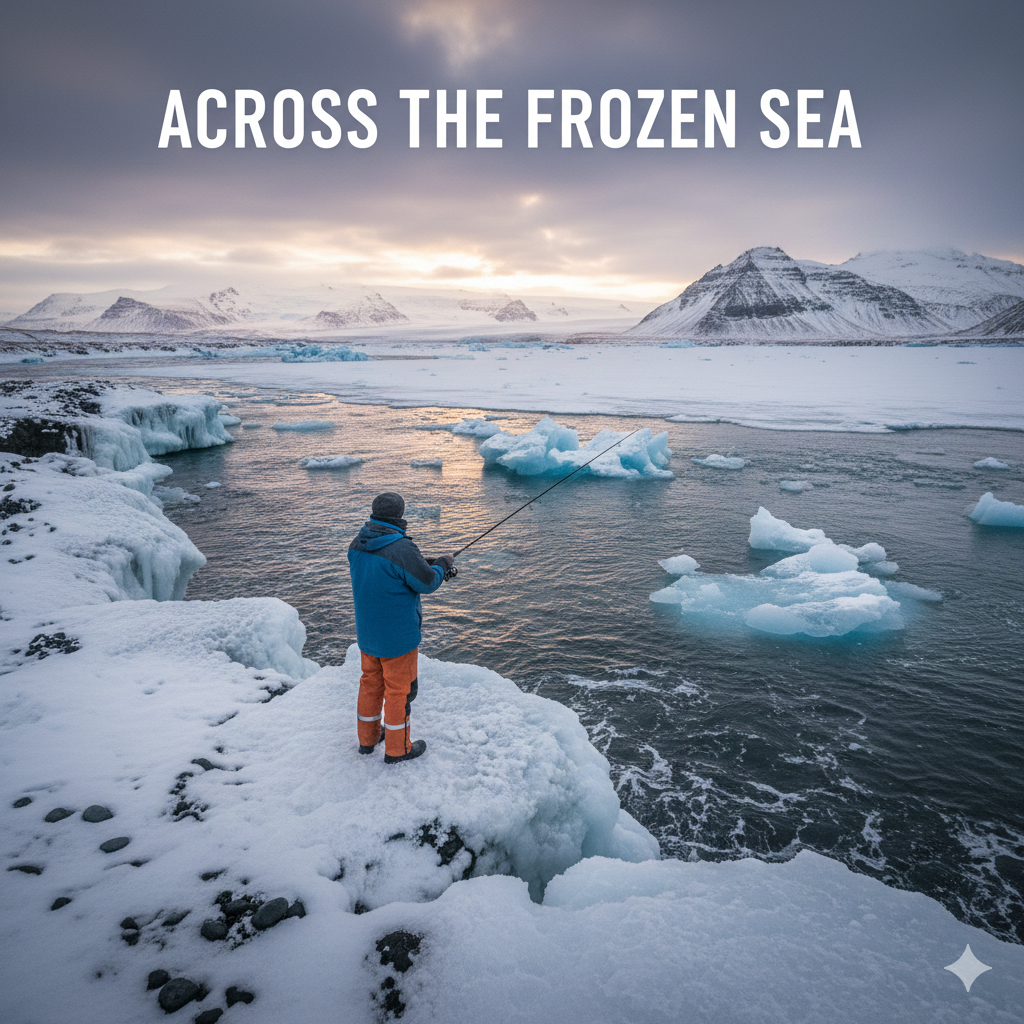
Mateo Reyes had spent most of his life by the sea. Growing up in a small coastal village in Pangasinan, the ocean was both his playground and his teacher. As a boy, he learned to swim before he learned to write. By fifteen, he was already helping his father cast nets into the deep blue waters of the Philippines. Fishing was all he knew but as the years passed, the sea that once provided for his family began to give less and less. Rising costs, fewer fish, and stronger storms made survival uncertain.
When Mateo’s wife, Dina, became pregnant with their second child, he knew love alone would not be enough to feed their growing family. One night, his cousin sent him a message:
“Mateo, may hiring ng fisherman sa Iceland. Malaki ang sahod. Pero malamig daw sobra.”
Iceland. A land of ice and fire. Mateo had never even seen snow before. But the thought of a stable income and a future for his children pushed him to take the risk.
The first time Mateo stepped off the plane in Reykjavik, the wind cut through his jacket like a blade. His ears burned, his fingers stiffened, and his breath turned into mist. He whispered to himself, “Diyos ko… paano ako mabubuhay dito?”
A company van brought him and other foreign workers to a small fishing town by the harbor. The sky was gray, the sea darker, and the cold sharper than anything he had known. He was assigned to a large fishing vessel that stayed at sea for days at a time.
That night, lying on his bunk bed inside the ship’s quarters, he missed the warm breeze of his hometown and the sound of palm trees rustling outside his window. But there was no turning back.
Mateo’s first day at sea was a shock. The waves were rough, the wind relentless, and the cold unforgiving. His job was to sort fish, clean the deck, repair nets, and help hail heavy catches aboard. He wore thick gloves, boots, and waterproof gear but still, the cold found its way into his bones.
The crew was made up of Icelanders, Poles, and a few Filipinos. Communication was difficult at first. The Icelandic captain spoke little English, but one Filipino co-worker, Noel, guided him.
“Masasanay ka rin,” Noel said. “Basta tandaan mo ingat palagi. Dito, isang mali mo lang, delikado.”
Mateo nodded. He worked quietly, observing every move, memorizing every knot, every safety rule, every signal used on deck.
There were days when the waves towered like mountains. The boat rocked violently. Mateo clung to the rail, whispering prayers under his breath.
But each time the nets came up full of fish, he felt a sense of triumph. He wasn’t just catching fish he was catching opportunities for his family’s future.
Weeks passed. Mateo’s hands became rougher, his shoulders stronger, his confidence steadier. He learned to fillet fish quickly, repair nets efficiently, and navigate the ship’s routines.
One stormy night, a rope snapped loose and swung wildly across the deck. One of the crew slipped. Without thinking, Mateo grabbed him by the jacket and pulled him to safety. The captain saw everything.
Later, inside the cabin, the captain patted his shoulder.
“Good reflex. Brave man,” he said in broken English.
It was the first time Mateo felt truly accepted.
The hardest part of his journey was the silence of distance. The ship’s internet was slow, and sometimes days passed without any message from home.
Whenever he managed to video call Dina, he saw their children growing taller. Their baby, who could barely crawl when he left, was now walking.
“Papa,” the child said one day, waving at the screen.
Mateo turned away so they wouldn’t see his tears.
“Malapit na, anak,” he whispered. “Konting tiis lang.”
With every salary he sent home, Dina paid debts, bought school supplies, and started building a small sari-sari store. Slowly, their life back home began to change.
After a year, Mateo was no longer the nervous newcomer. He had become one of the most reliable workers on the boat. The company offered him a longer contract and higher pay.
Noel joked,”Mateo, Icelandic fisherman ka na talaga!”
Mateo laughed, but deep inside, he felt proud. A Filipino from a small fishing village had found his place in one of the coldest corners of the world.
After two long years, Mateo finally flew back to the Philippines for vacation. As he stepped out of the arrival gate, his family ran toward him.
“Papa!” his children shouted, hugging him tightly.
Dina held his face, smiling through tears. “Salamat sa lahat.”
When Mateo saw their newly painted house and the small store Dina managed. his heart swelled. Every freezing night, every storm, every aching muscle had been worth it.
On his last night before returning to Iceland, Mateo sat by the shore of his hometown. The warm sea breeze touched his skin, so different from the icy winds of the north.
He looked at the stars and whispered:
“Sa kabilang dulo ng mundo ako nangingisda… pero dito pa rin and puso ko.”